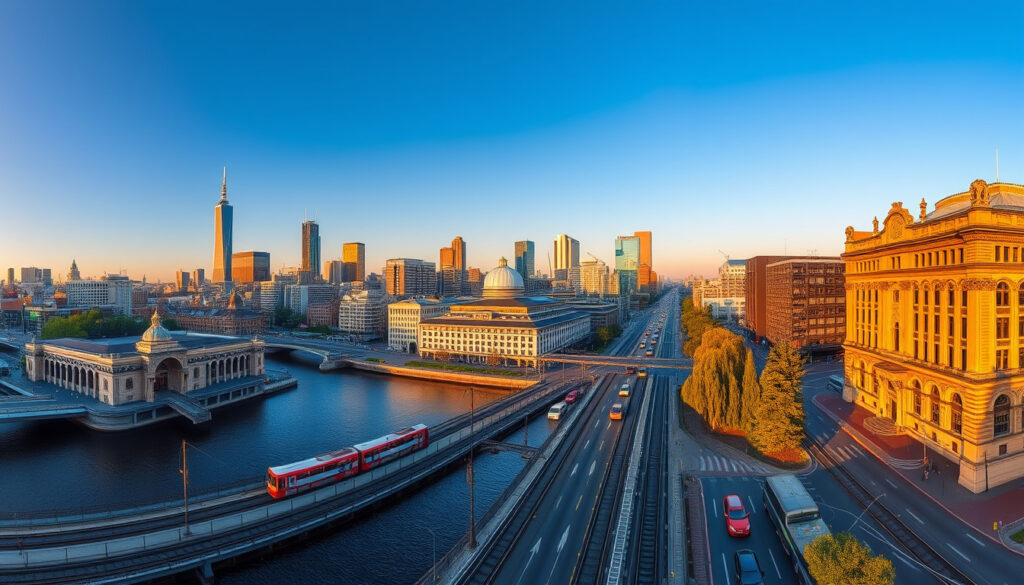
Things to Do in Melbourne: Top Attractions & Tips
Melbourne’s deliberately planned grid makes it unusually walkable for a city its size—a feature that helps visitors fall in love before they’ve even left the airport. Its laneways smell like coffee, trams glide past Victorian arcades, and street art changes every week. If you’re planning a first trip, you’re probably wondering where to start and whether three days is enough to catch the highlights. It is, provided you know which attractions actually justify the hype and which neighborhoods deserve a wide berth.
Best known for: coffee culture and sports · Ideal stay duration: 3-5 days · Top month to visit: spring (Sep-Nov) · Free attractions: Queen Victoria Market, Block Arcade · Family-friendly spots: zoos and interactive museums
Quick snapshot
The following cards organize what the research confirms, what remains uncertain, historical context, and what comes next in your planning.
- Queen Victoria Market spans 2 city blocks and hosts roughly 600 businesses (Local Adventurer)
- Federation Square opened in 2002 and ranks as Victoria’s number 1 tourist attraction (Nomads Hostel)
- The NGV International houses the world’s largest stained glass ceiling (YHA Australia)
- Current seasonal event schedules may vary from listed opening hours
- Pricing details for paid attractions shift seasonally
- Exact safety statistics for specific suburbs not publicly verified
- Block Arcade completed in 1892 with Victorian architecture (The Invisible Tourist)
- Melbourne Town Hall constructed in 1867 (The Invisible Tourist)
- Free walking tours depart from State Library at 10am and 2pm daily (YHA Australia)
- Three-day itinerary covers city center, markets, parks, and outskirts
- Spring (September-November) offers mild weather for outdoor exploration
- Free Tram Zone simplifies navigation through CBD grid layout
Key travel parameters for first-time Melbourne visitors include timing, transport costs, and walkability considerations.
| Key fact | Detail |
|---|---|
| Best time to visit | Spring (Sep-Nov) — mild temperatures, outdoor events |
| Known for | Coffee culture and sports |
| 3-day feasibility | Yes, city center is walkable and navigable |
| Official events site | whatson.melbourne.vic.gov.au |
| Free walking tours | State Library daily at 10am and 2pm; I’m Free at 10:30am (~3 hrs) |
| Transport basics | Myki card required outside Free Tram Zone |
What not to miss in Melbourne?
Iconic attractions
Federation Square anchors Melbourne’s cultural district, opening in 2002 as Victoria’s most visited tourist attraction (Nomads Hostel). The adjacent Ian Potter Centre houses Aboriginal artworks on its ground floor, while the National Gallery of Victoria (NGV) offers free viewing of permanent collections by Drysdale, Rodin, and Constable. The NGV International building also features what is widely regarded as the world’s largest stained glass ceiling.
Walking is the best way to see most Melbourne attractions because the CBD was deliberately planned in a grid pattern, making it unusually pedestrian-friendly for a major city.
Markets and arcades
Queen Victoria Market dominates two city blocks and hosts approximately 600 businesses selling Australian produce, gourmet foods, and souvenirs—the largest open-air market in the Southern Hemisphere (Local Adventurer). A few blocks away, the Block Arcade dates back to 1892 and showcases Victorian-era mosaic flooring beneath an ornate glass dome (The Invisible Tourist).
What are some unique things to do in Melbourne?
Hidden gems
Hosier Lane draws the crowds as Melbourne’s most famous street art laneway, but Caledonian Lane, AC/DC Lane, and Centre Place offer equally striking murals with fewer tourists competing for photos (Local Adventurer). South of the CBD, the Dandenong Ranges National Park features SkyHigh lookout and the 100 Steps Trail for those with a car or a full day to spare.
Unique experiences
For something different, Bartronica combines vintage arcade machines with Nintendo 64 Mario Kart tournaments and old-school pinball (YHA Australia). The Shrine of Remembrance provides free panoramic views of the Melbourne skyline, while St Kilda Pier offers a chance to watch fairy penguins waddle ashore at sunset.
Melbourne’s fickle weather means packing layers and an umbrella is non-negotiable—even sunny mornings can turn rainy by afternoon.
Can you do Melbourne in 3 days?
Day 1: City center
Start with a morning walking tour departing from State Library at 10am or 2pm daily to get oriented (YHA Australia). The I’m Free Walking Tours Melbourne Sights experience leaves at 10:30am and runs approximately 3 hours (Destination Less Travel). Spend the afternoon at Federation Square, NGV International, and Hosier Lane—all within walking distance.
Day 2: Markets and parks
Queen Victoria Market takes a full morning, especially on Tuesday or Saturday when artisan stalls join the regular vendors. The Royal Botanic Gardens offers a 3.84 km circuit called The Tan for joggers and walkers alike (Lonely Planet). Fitzroy Gardens next door features the Fairies Tree and a conservatory with seasonal floral displays.
Day 3: Outskirts
If you have a Myki card loaded with sufficient credit, tram and train options make Brighton Beach and its famous painted bathing boxes accessible for a half-day trip. Alternatively, St Kilda Pier works well as a sunset finale—combine it with the Library at The Dock’s free tai chi or table tennis if time allows.
How many days is enough to visit Melbourne?
Short trip vs extended
Two days covers the CBD highlights if you stick to walkable attractions and the Free Tram Zone. Three days adds buffer for Queen Victoria Market and St Kilda without requiring a car. Four or five days unlocks day trips to Dandenong Ranges, Brighton Beach, or the wine regions beyond the city center—useful for visitors who prefer nature over museums.
Road trip context
Travelers combining Melbourne with a Great Ocean Road itinerary typically allocate 3-4 nights in the city before branching out, using Melbourne as a base rather than attempting it as a drive-through destination.
Where to avoid staying in Melbourne?
Worst suburbs
Melbourne publishes suburb-level crime statistics annually, and certain areas north and west of the CBD consistently rank higher for property crime and personal safety incidents. Travelers unfamiliar with Australian cities should verify current advisory maps before booking accommodation, as neighborhood conditions shift over time.
No-go areas
Reputable accommodation platforms and travel forums flag specific suburbs where tourist infrastructure is minimal and street lighting may be inadequate at night. Sticking to central Melbourne, St Kilda, Fitzroy, and South Yarra keeps most visitors in well-trafficked, pedestrian-friendly zones.
The Free Tram Zone covers the CBD grid, but venturing even one stop past its boundary requires a loaded Myki card—traveling without one results in on-the-spot fines.
Whenever we travel to a new city, we take a free walking tour to get our bearings.
— Destination Less Travel (travel blogger)
Melbourne is known for its fickle weather, so it’s always good to be prepared for weather changes throughout the day by packing layers and an umbrella.
— Local Adventurer (travel guide author)
For first-time visitors, the city’s walkability is its best-kept secret—most major attractions cluster within a few city blocks, and the Free Tram Zone eliminates fare stress for inner-city rides. Spring brings mild weather perfect for walking tours and outdoor markets, making September through November the sweet spot for travelers who want to experience Melbourne without wrestling with rain gear every few hours.
Related reading: Hyatt Centric Melbourne CBD hotel · AFL Grand Final in Melbourne
Melbourne continually surprises with hidden gems, as outlined in this guide to fun things to do in Melbourne that spotlights tucked-away gardens and playful penguin encounters alongside the classics.
Frequently asked questions
What is Melbourne best known for?
Melbourne is best known for its coffee culture and sports scene, particularly Australian Rules Football. The city also distinguishes itself through street art laneways, Victorian architecture, and a thriving food market tradition.
What is the best month to go to Melbourne?
Spring—September through November—offers the most comfortable weather for walking tours and outdoor attractions, with mild temperatures and fewer sudden rain showers than winter months.
What is Melbourne’s best kept secret?
The city’s walkable CBD grid, combined with the Free Tram Zone that covers the city center, makes Melbourne unusually easy to explore without a car or expensive transport passes—a secret most visitors discover on their first free walking tour.
What are things to do in Melbourne for free?
Free highlights include Queen Victoria Market, Hosier Lane street art, the National Gallery of Victoria’s permanent collections, the Shrine of Remembrance skyline views, and free walking tours from State Library Victoria departing daily at 10am and 2pm.
What are things to do in Melbourne city?
Within the CBD grid, visitors can explore Federation Square, the NGV International, Block Arcade, Melbourne Town Hall, the ACMI film and TV museum, and Hosier Lane—all walkable within a single day.
What are things to do in Melbourne with kids?
Family-friendly options include Melbourne Zoo, the ACMI interactive film exhibits, Royal Botanic Gardens picnics, Brighton Beach bathing boxes, and the Old Treasury Building’s gold vault history—all manageable within a three-day itinerary.
What are the top 10 things to do in Melbourne?
The essentials are: Queen Victoria Market, Federation Square, NGV International, Hosier Lane, Block Arcade, Royal Botanic Gardens, St Kilda Pier fairy penguins, Shrine of Remembrance, State Library walking tours, and Brighton Beach bathing boxes.
More related posts
 Kurt Mann: Current Team, Age, Nationality, Contract Status
 Toilet Seat Guide: Sizing, Types & Installation Ireland
 Bulla Ice Cream – History, Flavours, Where to Buy & Reviews
 Zones of Regulation: Guide to 4 Zones & Teaching Tips
 Rosie O’Donnell: Ireland Move, Family, Feuds, and Biography
 Perchance AI Guide: Free Chat, Image & Video Tools
 James Acaster: Biography, Breakdown, Disability, and Net Worth
 Sony WF-1000XM5 – Full Specs ANC Battery Review 2024