New Balance 574 – Complete Sizing, History and Review Guide
The New Balance 574 stands as one of the most recognizable silhouettes in contemporary footwear, bridging decades of athletic heritage with modern street style. Originally engineered for performance running in 1988, this sneaker has transcended its technical origins to become a wardrobe staple across generations.
Designed by Steven Smith as a hybrid of the 576 and 577 models, the 574 introduced New Balance’s ENCAP midsole technology to a broader audience. Its transition from the track to casual wear in the early 1990s cemented its status as a cultural icon, defying the era-specific trends that typically date athletic footwear.
Today, the silhouette remains a bestseller for the Boston-based brand, available in hundreds of colorways and multiple width options. Whether serving as an entry point into the New Balance ecosystem or a reliable daily beater, the 574 continues to deliver the cushioned stability that defined its original running pedigree.
What Are New Balance 574 Shoes?
1988
Steven Smith
ENCAP Midsole
Lifestyle/Running
- Originally released as a performance road runner blending the 576 and 577 platforms
- Features ENCAP midsole technology combining foam core with polyurethane shell
- Transitioned from athletic to lifestyle use in the early 1990s
- Available in standard, wide, and extra-wide width options for varied foot shapes
- Hundreds of colorways released including special “History Class” archival packs
- Maintains bestseller status decades after initial launch
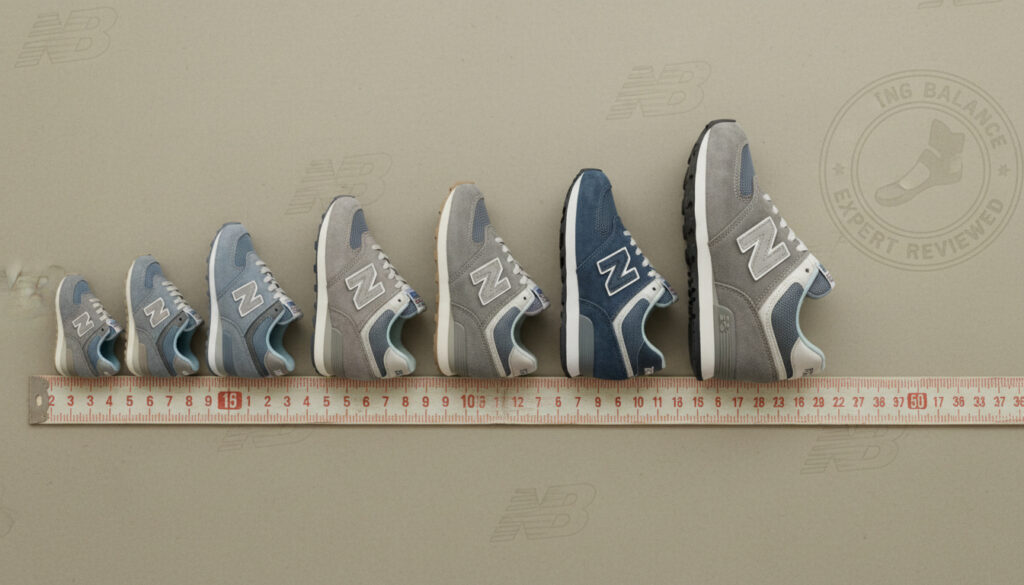
- Full family sizing available from baby to adult
| Attribute | Specification |
|---|---|
| Original Release | 1988 |
| Designer | Steven Smith |
| Midsole Technology | ENCAP |
| Heel Stack Height | 38.2 mm |
| Forefoot Width | 88.7 mm |
| Toebox Width | 74.1 mm |
| Upper Materials | Suede and Mesh |
| Midsole Forefoot Width | 114.3 mm |
How Do New Balance 574 Fit? Complete Sizing Guide
According to lab tests aggregating 298 votes, the New Balance 574 fits true to size in length, with a measured length of 268.3 mm—slightly below the average of 272.3 mm for lifestyle sneakers. RunRepeat data confirms strong consensus for ordering your usual size.
Are New Balance 574 True to Size?
Multiple independent reviews confirm the 574 runs true to size length-wise. The heel stack measures 38.2 mm, notably taller than competitors like the Reebok Classic Leather at 35.7 mm, providing substantial cushioning without compromising ground feel. Captain Creps notes the importance of considering width options when determining your optimal fit.
Width Options and Foot Shape Considerations
The 574 offers a wide footbed and accommodating toebox, available in standard (D), wide (2E), and extra-wide (4E) configurations. The midsole forefoot width of 114.3 mm exceeds many competitors, providing excellent stability for broader feet. However, Agletless reports that while the toebox measures 74.1 mm—wider than average—the forefoot at 88.7 mm runs narrower than the 92.5 mm standard, potentially feeling snug for medium feet.
The 574 accommodates broader feet through multiple width options, though the forefoot measures 88.7 mm—narrower than the 92.5 mm average. For narrow feet, consider sizing down or selecting narrower widths to prevent excess room in the toebox.
New Balance 574 Review: Are They Comfortable?
Walking Performance and Daily Wear
The ENCAP midsole delivers exceptional comfort for walking and casual use, earning the 574 its bestseller status. The Sole Supplier describes the ride as stable and plush without squishing the feet, suitable for all-day wear. The combination of cushioned support and breathable materials makes it particularly suitable for extended periods of standing or urban commuting.
Materials and Construction Analysis
Soft suede and mesh uppers provide breathability and suppleness, while the ENCAP midsole construction offers durability through its foam and polyurethane combination. The build quality supports daily rotation, with users reporting consistent performance over extended wear periods. If you’re documenting your sneaker collection through photography, you might also want to review How to Backup Photos to Cloud – Step-by-Step 2025 Guide to preserve your images securely.
While the toebox measures 74.1 mm—wider than average—the forefoot runs snug at 88.7 mm. Narrow-footed wearers may find the toebox roomy despite the tighter midfoot fit, potentially requiring a half-size reduction for optimal comfort.
History of the New Balance 574
1988 Design Origins
Launched in 1988, the 574 marked New Balance’s deliberate entry into lifestyle sneakers, though it initially served as a technical road runner. Designer Steven Smith created the silhouette by merging elements from the 576 and 577 models, implementing early ENCAP technology for superior cushioning. Historical documentation shows how this hybrid approach created a new category of versatile footwear.
The 574 vs 550 Comparison
When compared to the basketball-inspired 550, the 574 offers distinct advantages for walking comfort. The 574 features a taller heel stack at 38.2 mm versus the 550’s lower profile, along with running-derived ENCAP cushioning compared to the 550’s simpler foam construction. While the 550 presents a sleeker court-retro aesthetic, the 574 edges ahead in everyday plushness and width availability.
Colorways and Manufacturing Origins
Hundreds of colorways exist, from classic grey and navy to collaboration packs like the “History Class” series featuring Navy/Off White and Grey/Sky Blue variations. Special editions revisit archival takes on the model. While standard production occurs overseas, premium archival releases including select “History Class” JP models feature Made in USA construction.
Premium archival releases including select “History Class” JP models feature domestic production, identifiable through tongue labeling. Standard retail 574s typically manufacture overseas despite the brand’s American heritage.
New Balance 574 Release Timeline
- : Initial release as technical road running shoe designed by Steven Smith
- : Transition from performance athletic to lifestyle casual wear
- : Establishment as cult bestseller and rotation staple
- : Introduction of “History Class” pack reissues and archival colorways
- : Continued collaboration drops and restocks maintaining relevance
What We Know and Don’t Know About New Balance 574
Established Information
- Confirmed 1988 release date
- Steven Smith designer attribution
- ENCAP technology specification
- True-to-size fit consensus
- Heel stack height of 38.2 mm
Information Remaining Unclear
- Specific weight measurements vary by source
- Detailed 2025 update specifications
- Exact production ratios of USA vs overseas models
- Specific cushioning density variations by colorway
Cultural Impact and Design Philosophy
The 574’s transition from performance running to lifestyle staple occurred by the early 1990s, driven by its timeless design that defies era-specific categorization. Unlike trend-driven silhouettes that anchor themselves to specific decades, the 574 maintains relevance through versatility—functioning equally well with athletic wear, denim, or tailored casuals.
Its market position differs from heritage competitors through New Balance’s commitment to width inclusivity and multi-generational sizing. The silhouette serves as both an accessible entry point into the brand’s ecosystem and a reliable staple for seasoned collectors. When sharing sneaker photography across platforms, remember to Convert HEIC to JPG – Free Guide for Windows Mac iPhone for universal compatibility.
Expert Perspectives on the 574
The 574 offers a wide footbed and roomy toebox, available in standard, wide, and extra-wide options for varied foot shapes—ideal for wider feet but potentially roomy for narrow ones.
Captain Creps Sizing Analysis
Lab tests confirm the 574 runs true to size with a stable, plush ride suitable for all-day wear, featuring a heel stack taller than most lifestyle competitors.
RunRepeat Technical Review
Final Verdict on New Balance 574
The New Balance 574 delivers enduring value through its combination of athletic heritage and everyday versatility. With true-to-size fit, multiple width options, and proven ENCAP cushioning, it remains a reliable choice for extended walking and casual wear. While specific 2025 updates remain unspecified, the silhouette’s continued production of archival colorways and special editions confirms its lasting relevance in the contemporary footwear market.
Frequently Asked Questions
Do New Balance 574 stretch over time?
The suede uppers may soften slightly with wear, but the mesh and synthetic overlays maintain structural integrity. Most users report minimal stretching, suggesting you should not size down expecting significant expansion.
Are New Balance 574 good for wide feet?
Yes, the 574 accommodates wide feet through dedicated width options (2E and 4E). The midsole forefoot measures 114.3 mm, providing stability, though the forefoot width of 88.7 mm runs slightly narrow.
Can you run in New Balance 574?
While originally designed as a road runner in 1988, the 574 transitioned to lifestyle use by the 1990s. Modern versions lack contemporary running technology and are optimized for walking and casual wear rather than athletic performance.
How do you clean New Balance 574 suede?
Use a soft-bristled brush to remove surface dirt, then apply a suede-specific cleaner with minimal moisture. Avoid submerging the shoes, as water can damage the ENCAP midsole adhesive and suede texture.
Are all New Balance 574 made in USA?
No, most 574s are manufactured overseas. Premium archival releases including select “History Class” JP models feature Made in USA construction. Check the tongue label for “Made in USA” stitching to verify domestic production.
Do New Balance 574 have arch support?
The ENCAP midsole provides moderate arch support suitable for neutral pronators. However, those requiring specialized orthotic support may need to remove the factory insole to accommodate custom inserts.
More related posts
 Kate Bush: Net Worth, Vocal Range & Stranger Things Revival
 Brian Brown: Australian Actor’s Life, Career, and Net Worth
 Chevy Chase: Health Issues, Feuds, and Career Biography
 The Family Next Door ABC: Story, Cast, Plot Twist & Review
 Amber Glenn: Gender, LGBTQ Advocacy & Olympic Backlash
 Davie Fogarty: Net Worth, Companies, and Is He a Billionaire
 Dolphins vs Broncos: Scores, Odds, Highlights & 2026 Matches
 Luke Perry’s True Cause of Death: Stroke, Family, and Legacy