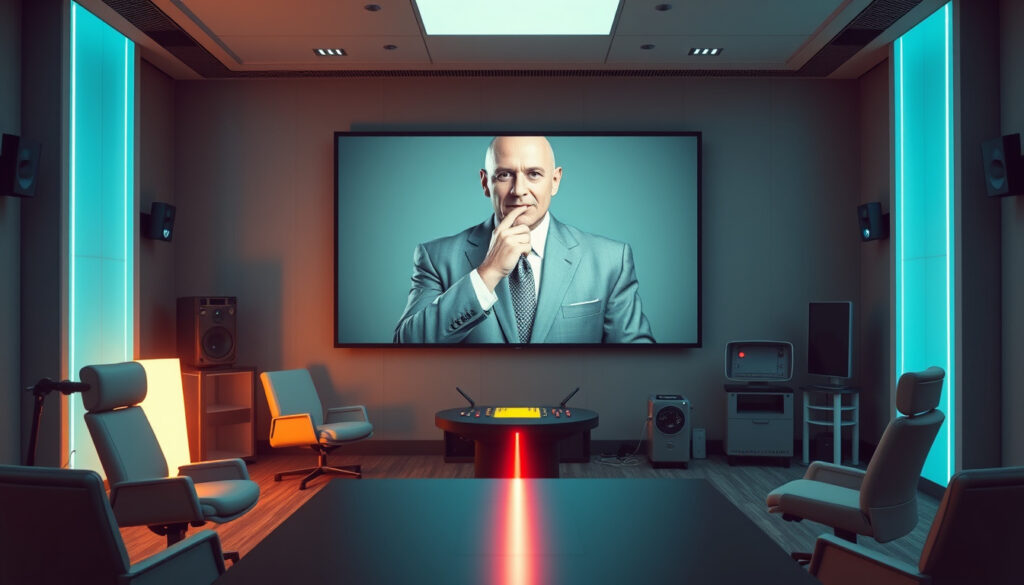
Dr. Evil: The Parody, Quotes, and Real-World Inspiration
Few comedy villains have left as lasting an impression as Dr. Evil, the lisping, pinky-flicking antagonist of the Austin Powers films. Created and portrayed by Mike Myers, he first appeared in 1997’s Austin Powers: International Man of Mystery as a spot-on parody of James Bond’s most iconic foe. By the time the trilogy wrapped in 2002, Dr. Evil had become a cultural shorthand for absurd villainy — complete with a ransom demand of one million dollars and a tiny clone named Mini-Me.
First appearance: 1997 in Austin Powers: International Man of Mystery · Portrayed by: Mike Myers · Parody of: Ernst Stavro Blofeld (James Bond villain) · Signature gesture: Pinky finger to mouth · Number of films: 3 (as of 2025)
Quick snapshot
- Whether the pinky gesture was originally inspired by Donald Trump — Mike Myers has stated this, but the claim remains anecdotal (Screen Rant)
- Exact word count of famous line ranking on AFI lists (American Film Institute)
- 1997: First film International Man of Mystery released (Wikipedia)
- 1999: The Spy Who Shagged Me introduces “I love you… you complete me” (American Film Institute)
- 2002: Goldmember reveals Dr. Evil is Austin Powers’ twin brother (Wikipedia)
- No new Austin Powers film announced as of 2025; fans continue to request a fourth installment (IMDb)
- Dr. Evil remains a frequent cultural reference in satire and meme culture (Know Your Meme)
What is Dr. Evil a parody of?
Dr. Evil is a direct satirical composite of several James Bond villains, with one primary target dominating his visual and vocal identity. Understanding the parody requires looking at the Bond villains he lampoons — and the real-world figures who shaped his mannerisms.
The parody of Ernst Stavro Blofeld
The most obvious inspiration for Dr. Evil is Ernst Stavro Blofeld, the recurring antagonist of the James Bond franchise. Blofeld — bald, scarred, dressed in a neutral-colored suit, and perpetually stroking a white cat — is the archetype Dr. Evil mirrors almost beat-for-beat. As Comic Book Resources notes, Dr. Evil is a near physical replica of Blofeld’s version as portrayed with a bald head, facial scar, neutral-colored suit, and cat. The first scene in which Dr. Evil appears shows him stroking a cat, a direct comic tribute to Blofeld’s feline-stroking image.
Other James Bond villain influences
While Blofeld is the primary target, Dr. Evil also incorporates elements of other Bond antagonists. Screen Rant points out that Dr. Evil’s aesthetic combines Dr. No and Blofeld, including a gray jacket and a scar plus a cat. The character’s absurdly grandiose — yet comically underfunded — plans also echo the over-the-top schemes of Bond villains like Alec Trevelyan and Max Zorin. What makes Dr. Evil distinct, however, is that his evilness is constantly undercut by incompetence: he is genre-blind and frequently behaves in a way that makes him seem less competent than his own henchmen, as noted by TV Tropes.
Real-world inspirations: Donald Trump
Perhaps the most surprising influence on Dr. Evil is Donald Trump. Mike Myers has stated in multiple interviews that he based the character’s lisp and pinky gesture on Donald Trump’s mannerisms — a claim that has been widely reported but remains anecdotal. The connection isn’t merely visual: Trump’s real estate branding style and transactional approach were reportedly woven into Dr. Evil’s overconfident, deal-making speech patterns. As Screen Rant notes, every time you see Dr. Evil speak with his pinky to his mouth, you’re seeing a parody of Trump’s distinctive hand gestures.
The Trump connection turns Dr. Evil from a simple Bond parody into a layered commentary on power and performance. For audiences watching today, Dr. Evil’s theatrical self-importance reads differently than it did in 1997 — because the real-world referent has become the most powerful man on the planet.
What was Dr. Evil’s famous line?
Dr. Evil’s dialogue is a major source of his enduring appeal. Several lines have entered the popular lexicon, and one was even ranked by the American Film Institute as one of the top movie quotes of all time.
“I love you… you complete me”
In Austin Powers: The Spy Who Shagged Me (1999), Dr. Evil delivers an emotionally earnest line to his tiny clone Mini-Me. The sincerity — played completely straight — is what makes it hilarious. The American Film Institute ranked this line among its 100 greatest movie quotes in cinema history, cementing its place in pop culture.
“One million dollars”
In the first film, Dr. Evil famously ransoms the world for — as his henchmen point out — a laughably small sum. The joke works because it satirizes the inflated stakes of Bond villains, as noted by Character Gallery. After his cryogenically frozen 1960s mind misunderstands inflation, he demands “one million dollars” — and argues with his own henchmen that it’s a perfectly reasonable amount.
“Throw me a frickin’ bone here”
Perhaps the most relatable of Dr. Evil’s outbursts, this line captures his perpetual frustration. The delivery — half plea, half rant — encapsulates the character’s entire psychology: a man who takes himself seriously as a supervillain but can never quite pull off a competent scheme.
Other notable quotes
- “I’m a, I’m a supervillain. Wait, wait. Do I look like a guy with a plan?”
- “You know, I have one simple request. And that is to have sharks with frickin’ laser beams attached to their heads!”
- “There are only two things I can’t stand in this world: people who are intolerant of other people’s cultures… and the Dutch.”
Are Austin Powers and Dr. Evil the same person?
In a plot development that recontextualizes the entire series, Austin Powers in Goldmember revealed that the hero and his nemesis are actually twin brothers separated at birth. This is not a metaphor — it is the explicit canon of the franchise.
Twin brothers revelation
In Goldmember (2002), it is revealed that Dr. Evil and Austin Powers are twin brothers. Dr. Evil’s real name is Douglas “Dougie” Powers, and he was kidnapped as a child, raised by a villainous family, and grew up to become Dr. Evil. This revelation, which mirrors the classic “separated at birth” trope, is confirmed by Wikipedia.
Physical similarities and differences
Both characters are played by Mike Myers, which visually reinforces the twin concept. However, their appearances diverge sharply: Austin Powers is clean-shaven with a full head of hair and wears colorful, loud suits; Dr. Evil is bald, scarred, and dressed in muted military-style coats or business suits. The contrast between groovy 1960s spy and dour 1960s villain is the entire visual joke.
Character backgrounds
- Austin Powers: A British spy frozen in 1967, revived in the 1990s to defeat his nemesis. He embodies Swinging Sixties optimism and sexual liberation.
- Dr. Evil: Austin’s twin, frozen in 1967 by his own choice, revived alongside him. He embodies the period’s anxiety about global destruction and Cold War paranoia.
The pattern: Making the hero and villain literal brothers eliminates the distance between good and evil. The films suggest that circumstance — not nature — creates a villain. Dr. Evil is evil because he was raised that way, not because he was born that way.
Who was Dr. Evil based off of?
We’ve already covered Blofeld and Trump, but Dr. Evil’s DNA includes several other cultural references worth unpacking. A comparison table helps make the connections explicit.
Four inspirations, one composite: the table below maps Dr. Evil’s traits to their real-world and fictional sources.
| Trait or Feature | Source of Inspiration | How It Appears in Dr. Evil |
|---|---|---|
| Visual appearance | Ernst Stavro Blofeld | Bald head, facial scar, neutral suit, white cat (CBR) |
| Lisp and speech pattern | Donald Trump (reportedly) | Overconfident, deal-making tone; pinky-to-mouth gesture (Screen Rant) |
| Fashion | Dr. No and Blofeld | Gray jacket + military-style coats (Screen Rant) |
| Evil organization | SPECTRE (from James Bond) | Virtucon, a parody of global villainous conglomerates (TV Tropes) |
| Self-importance | Generic Bond villains | Pompous speeches, melodramatic monologues (Screen Rant) |
The catch: The Trump connection is the most debated. Myers’ claim is unverified by any third-party source, and Trump himself has never publicly acknowledged the parody. Yet the gesture is so distinctive that most viewers now associate it directly with the former president.
Is Dr. Evil actually evil?
This question gets at the heart of what makes Dr. Evil work as a character. On paper, he is evil: he plots to destroy the world, extorts governments, and operates a shadowy criminal organization. But in practice, his evilness is so constantly undermined by incompetence and absurdity that the label becomes a joke.
Comedic portrayal of evil
Dr. Evil is a parody of evil — not a sincere representation of it. Screen Rant characterizes him as a “spot-on parody” of Bond villains, meaning his evil is a comedic amplification of tropes that were already somewhat ridiculous. He threatens the world but cannot agree on a ransom amount. He kidnaps Austin Powers but spends most of his screen time bickering with his subordinates.
Dr. Evil’s intentions and behavior
Despite his name, Dr. Evil’s actions are often petty rather than genuinely malevolent. He wants respect, recognition, and a reasonable ransom — not chaos or destruction for its own sake. His relationship with Mini-Me is arguably the most emotionally genuine relationship in the series, culminating in the line “I love you… you complete me.” As TV Tropes notes, he is genre-blind: he behaves as though he is in a serious Bond film, but the world around him is a comedy.
Character development across films
Over the three films, Dr. Evil evolves from a straightforward parody into a more complex figure. In Goldmember, he learns that Austin is his twin brother, and the two briefly team up to defeat a greater threat (Goldmember himself). By the end of the trilogy, Dr. Evil is not defeated so much as domesticated — he attends family therapy and seems to reconcile with his heroic brother. The arc suggests that even a supervillain can be rehabilitated, so long as he gets the attention he craves.
“I love you… you complete me.”
— Dr. Evil, Austin Powers: The Spy Who Shagged Me (1999)
“One million dollars.”
— Dr. Evil, Austin Powers: International Man of Mystery (1997)
For fans of character analysis, the broader lesson is this: Dr. Evil is evil the way a child playing dress-up is evil — performative, insecure, and desperate for validation. His real target is not the world, but the approval he never received as a child stolen from his family. For anyone writing about comedy villains, the takeaway is clear: the best parodies come from affection, not contempt.
screenrant.com, simple.wikipedia.org, tvtropes.org, youtube.com, dstv.com, es.wikipedia.org, it.wikipedia.org
Frequently asked questions
What is Dr. Evil’s real name?
Dr. Evil’s real name is Douglas Powers. He is revealed to be Austin Powers’ twin brother in Austin Powers in Goldmember (Wikipedia).
Who plays Dr. Evil?
Dr. Evil is portrayed by Mike Myers, who also plays Austin Powers and several other characters in the series.
How many Austin Powers movies are there?
There are three Austin Powers films featuring Dr. Evil, released in 1997, 1999, and 2002.
Does Dr. Evil have any children?
Dr. Evil has a son named Scott Evil, who is portrayed as a frustrated and rebellious teenager who disapproves of his father’s evil schemes.
What is the name of Dr. Evil’s cat?
The cat’s name is not given in the films. It functions purely as a visual prop parodying Blofeld’s cat.
What is the significance of Dr. Evil’s scar?
The scar is part of his parody of Blofeld, who has a similar facial scar. No specific origin story is given in the films.
Why does Dr. Evil speak with a lisp?
Mike Myers has said the lisp was based on Donald Trump’s speech mannerisms. This is widely reported but remains anecdotal (Screen Rant).
For readers exploring other iconic character analyses, check out Mr Krabs: Disability, Origins, and Darkest Secret and Jesse Pinkman: The Tragic Hero of Breaking Bad Explained.
More related posts
 Weeping Lilly Pilly: Growth, Root System, and Hedge Guide
 FIFO Jobs Australia: Salary, How to Get Hired & Pros/Cons
 Nike Tech Fleece: History, Pricing, and 2026 Popularity
 Mary Steenburgen: Oscar Winner, Resilient Life
 Glen Campbell: Life, Music, Family, and Estate Disputes Explained
 Neil Diamond’s Health, Marriages, and Lasting Legacy
 Ilona Maher: Facts About Gender, Heritage, and Life
 Gugu Mbatha-Raw: Ethnicity, Net Worth, Movies & Career