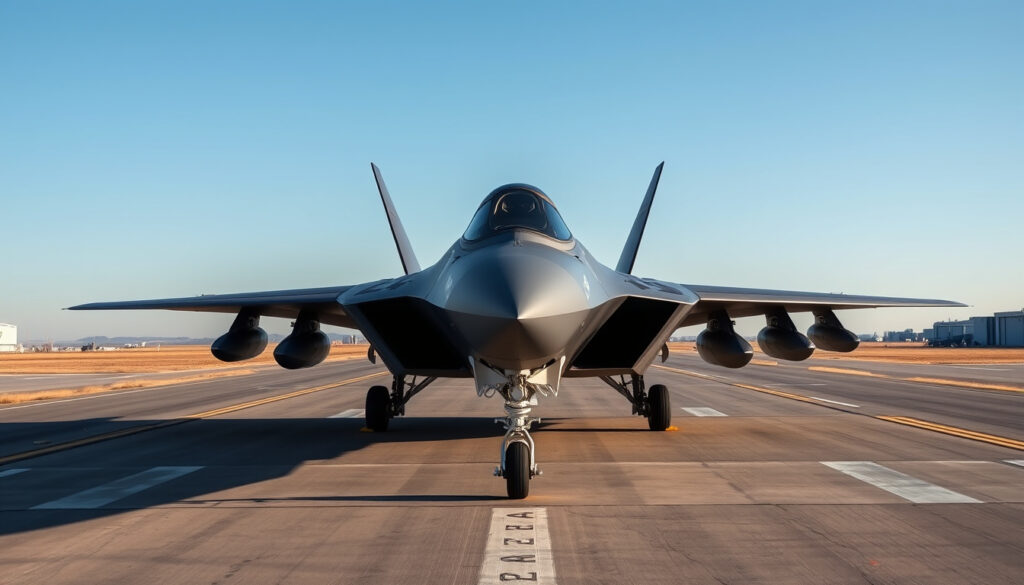
F-47 – Boeing Wins $20 Billion NGAD Contract
President Donald Trump announced on March 21, 2025, that Boeing had secured the U.S. Air Force’s Next Generation Air Dominance contract for the crewed sixth-generation fighter jet, designated the F-47. The award, valued at approximately $20 billion, covers engineering and manufacturing development, including maturing, integrating, and testing all components of the aircraft, producing test models, and options for low-rate initial production.
The announcement came during a White House press briefing alongside Secretary of Defense Pete Hegseth and Air Force Chief of Staff Gen. David Allvin. President Trump described the F-47 as the “world’s first sixth-generation fighter jet” featuring “state-of-the-art stealth technologies” that make it “virtually unseeable.” The contract competition involved Boeing and Lockheed Martin after Northrop Grumman withdrew as a prime contractor in 2023.
Boeing’s interim president and CEO of Defense, Space and Security, Steve Parker, emphasized the company’s substantial investments in preparation for this program. The Air Force plans to spend $20 billion on NGAD from 2025 to 2029, though Trump declined to disclose specific unit costs to protect classified information.
Key Facts and Capabilities of the F-47
F-47
Boeing
$20 billion
Above Mach 2
- Advanced stealth capabilities for near-invisibility
- Combat radius exceeding 1,000 nautical miles (1,900 km)
- Integration with autonomous drone wingmen (CCA drones)
- Cutting-edge engines, electronic warfare, and sensors
- Battle management and advanced networking capabilities
- Connectivity with satellites and other platforms
- Designed to counter threats from advanced adversaries including China
| Specification | Details |
|---|---|
| Contract Type | Cost-plus incentive fee |
| Engine | Advanced adaptive engine in development |
| Planned Fleet Size | 185+ aircraft |
| Predecessor | F-22 Raptor |
| First Flight Target | 2028 |
| Program Duration | Five years of X-plane testing |
The NGAD program faced a pause in May 2024 under former Air Force Secretary Frank Kendall due to cost estimates reaching up to $300 million per aircraft—triple the price of an F-35. A subsequent review affirmed NGAD’s strategic necessity, leading to the contract award.
Design and Technological Features
Stealth and Survivability
The F-47 incorporates advanced stealth technologies that President Trump described as making the aircraft “virtually unseeable.” This represents a significant advancement over fifth-generation fighters, addressing the evolving threat landscape posed by sophisticated air defense systems developed by peer competitors.
The aircraft will serve as the core of the NGAD “family of systems,” integrating advanced sensors, weaponry, and networking capabilities that enable connectivity with satellites and other platforms. Air Force Chief of Staff Allvin stated the F-47 will be more adaptable to threats such as those from China compared to existing platforms.
Performance Specifications
According to available specifications, the F-47 will achieve a top speed above Mach 2 with a combat radius exceeding 1,000 nautical miles (1,900 km). The aircraft will feature cutting-edge engines currently in development, along with advanced electronic warfare systems, sensors, and battle management capabilities.
A notable operational feature involves the aircraft’s ability to operate alongside autonomous drone wingmen, designated as collaborative combat aircraft (CCA). This manned-unmanned teaming concept represents a fundamental shift in aerial combat doctrine, allowing the F-47 to command and coordinate multiple autonomous platforms during missions.
Experimental X-planes have flown for five years, logging hundreds of hours with DARPA support. This sustained testing program enabled accelerated development, with the first flight now targeted for 2028 and the first production example already in work.
Strategic Context and Replacement Strategy
Fleet Replacement Plans
The F-47 will replace the F-22 Raptor as the centerpiece of U.S. air dominance capabilities. The Air Force currently operates approximately 180 F-22 aircraft, each purchased at $143 million per unit. Air Force Chief of Staff Allvin indicated the new fighter will cost less than the F-22 while resulting in a larger fleet than the current Raptor squadron.
The strategic rationale centers on addressing advanced adversaries. Boeing’s prototyping efforts matured the design while preventing a Lockheed Martin monopoly on fighter production, marking what observers describe as a company resurgence in the military aviation sector.
International Considerations
Basing and export decisions remain under consideration. The program office has discussed potentially offering “toned-down” versions of the F-47 to allied nations, though specific export agreements have not been finalized. Such arrangements would require congressional approval and careful consideration of technology transfer implications.
Development Timeline
- 2020-2024: DARPA-supported X-plane testing with hundreds of flight hours logged
- May 2024: Program pause under Air Force Secretary Frank Kendall due to cost concerns
- 2024: Review affirming NGAD program necessity
- March 21, 2025: Boeing announced as contract winner; F-47 designation revealed
- 2028: Targeted first flight of F-47
- 2025-2029: $20 billion in planned NGAD spending
Earlier estimates placed per-aircraft costs at up to $300 million—three times the price of an F-35. While current projections suggest the F-47 will cost less than the F-22, precise unit costs remain classified and undisclosed.
What We Know and What Remains Unclear
| Established Information | Uncertainties |
|---|---|
| Boeing won the NGAD contract | Precise unit cost per aircraft |
| Contract value: approximately $20 billion | Specific basing locations |
| Designation: F-47 | Final export policy details |
| Speed: above Mach 2 | Exact engine specifications |
| Combat radius: 1,000+ nautical miles | Full sensor and weapons loadout |
| Planned fleet: 185+ aircraft | Integration timeline with CCA drones |
Industry and Strategic Implications
The F-47 contract represents a significant achievement for Boeing’s defense division following years of challenges in commercial aviation. The company’s ability to secure this premier fighter contract marks a turnaround in its military aerospace business and ends Lockheed Martin’s de facto monopoly on U.S. crewed fighter production that existed since the F-22 program closed.
The contract structure mirrors the B-21 Raider program, using a cost-plus incentive fee arrangement. This approach provides Boeing with development funding while creating incentives for cost control. The decision to proceed with crewed development reflects the Air Force’s assessment that human judgment remains essential for complex combat decisions despite advances in autonomous systems.
For more analysis on strategic materials and defense industry economics, see our coverage of rare earth supply chains that underpin advanced aerospace manufacturing.
Official Sources and Statements
“The F-47 represents the world’s first sixth-generation fighter jet with state-of-the-art stealth technologies making it virtually unseeable.”
— President Donald Trump, White House Press Briefing, March 21, 2025
“The F-47 will cost less than the F-22, be more adaptable to threats like those from China, and result in a larger fleet than the Raptors.”
— Air Force Chief of Staff Gen. David Allvin
Additional context on advanced aerospace systems can be found in our review of sensor and electronics integration in modern military platforms.
Summary
Boeing’s selection to build the F-47 marks a pivotal moment in U.S. military aviation, establishing the company as a prime fighter contractor after decades and ending Lockheed Martin’s exclusive position in crewed tactical aircraft. The approximately $20 billion contract initiates full-scale development of what the Air Force describes as the world’s first sixth-generation fighter, featuring advanced stealth, speeds above Mach 2, and the ability to command autonomous drone wingmen. With a planned fleet exceeding 185 aircraft and initial flight targeted for 2028, the F-47 program represents the largest U.S. fighter development since the F-22 Raptor. Precise unit costs and basing decisions remain classified or pending, reflecting the sensitive nature of the platform’s capabilities.
Frequently Asked Questions
When was the F-47 contract awarded?
Boeing won the NGAD contract on March 21, 2025, as announced by President Donald Trump during a White House press briefing.
How much is the F-47 contract worth?
The contract is valued at approximately $20 billion, covering engineering and manufacturing development, testing, and options for low-rate initial production.
What speed can the F-47 fly at?
The F-47 is specified to achieve a top speed above Mach 2, with a combat radius exceeding 1,000 nautical miles (1,900 km).
How many F-47 aircraft will the Air Force purchase?
The Air Force plans to acquire more than 185 F-47 aircraft, forming a larger fleet than the current 180-aircraft F-22 Raptor squadron.
What is the F-47’s role in the NGAD family of systems?
The F-47 serves as the core of the NGAD “family of systems,” integrating with collaborative combat aircraft (CCA) drones, advanced sensors, weaponry, and networking for satellite connectivity.
When will the F-47 make its first flight?
The first flight of the F-47 is targeted for 2028, with the first production example already in development.
How does the F-47 compare to the F-22 Raptor?
Air Force Chief of Staff Allvin stated the F-47 will cost less than the F-22, offer greater adaptability to modern threats, and result in a larger fleet.
More related posts
 Cade Cunningham Collapsed Lung: Injury, Height & Family
 Lauren Lane Biography: Net Worth, Husband, Baby & Teaching Career
 Joey King: Biography, Relationships, Wedding, and Health Facts
 Aishwarya Rai: Weight Gain, Divorce Rumors, and Career
 Davie Fogarty: Net Worth, Companies, and Is He a Billionaire
 Mr Krabs: Disability, Origins, and Darkest Secret
 Kate Bush: Net Worth, Vocal Range & Stranger Things Revival
 Julia Butters: Age, Career & Why She Left American Housewife