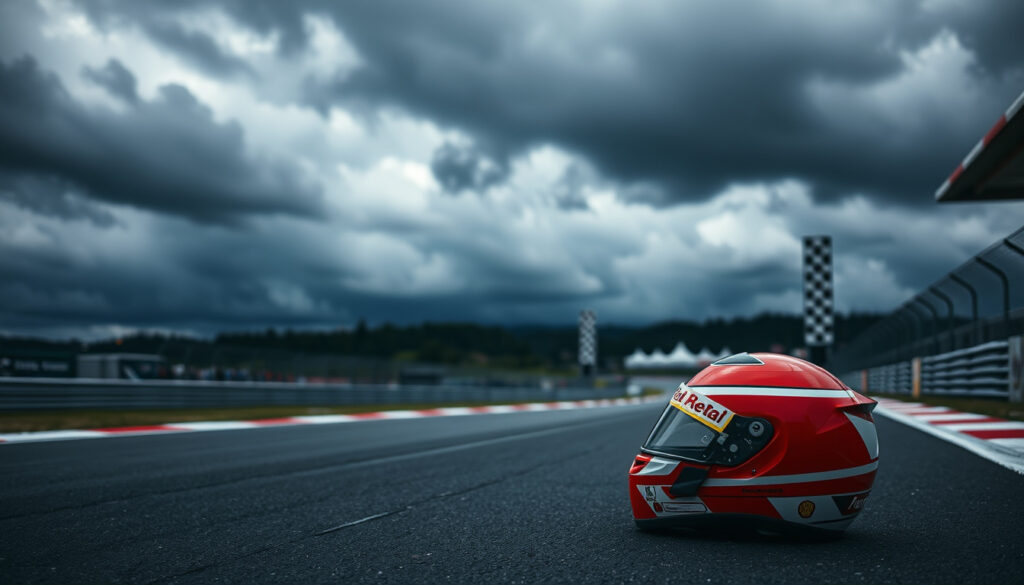
James Hunt: Death, Niki Lauda, and the Accuracy of Rush
James Hunt is one of those names that sparks two very different images: the hard-living, champagne-guzzling playboy of the 1970s pit lane versus the razor-tongued commentator who demystified Formula One for millions of BBC viewers. He won the 1976 World Championship by a single point after one of the most dramatic seasons in motorsport history, then walked away at 32 and died of a heart attack at 45. This article separates the man from the myth — his rivalry with Niki Lauda, the health quirks that followed him, and where the film Rush took liberties.
Born: 29 August 1947 · Died: 15 June 1993 (aged 45) · F1 World Champion: 1976 · Grand Prix wins: 10 · F1 races: 92
Quick snapshot
- Won the 1976 F1 title by one point after Lauda’s crash (Škoda Motorsport)
- Retired from racing after the 1979 season (Wikipedia biography)
- Died of a heart attack at his Wimbledon home in 1993 (History vs Hollywood)
- Became a BBC F1 commentator in the 1980s (Wikipedia biography)
- Whether Hunt’s pre-race vomiting was caused by an underlying eating disorder or purely by stress (Wikipedia biography)
- Exact details of private conversations between Hunt and Lauda portrayed in Rush (Reddit r/formula1)
- Hunt’s financial status in the years after retirement (Wikipedia biography)
- Whether the film’s portrayal of Hunt punching a journalist is accurate (Hande’s Blog)
- Whether Hunt’s financial situation was as comfortable as later assumed (Wikipedia biography)
- 1976 season: Hunt wins title after Lauda’s Nürburgring crash (Škoda Motorsport)
- 1980s: Hunt transitions to broadcasting (Wikipedia biography)
- 15 June 1993: Hunt dies of heart attack (History vs Hollywood)
- 2013: Rush released, reigniting public interest (IMDb)
- Continued debate over Rush accuracy as new fans discover the story (Reddit r/formula1)
- Ongoing F1 fan interest in Hunt’s legacy and the Lauda rivalry (Wikipedia Rush film article)
The table below summarizes key biographical data and career statistics for James Hunt.
| Attribute | Value |
|---|---|
| Full name | James Simon Wallis Hunt |
| Born | 29 August 1947, London, England |
| Died | 15 June 1993, Wimbledon, London (aged 45) |
| Nationality | British |
| World Championships | 1 (1976) |
| Grand Prix wins | 10 |
| Podiums | 23 |
| Pole positions | 14 |
| Height | 6 ft 0 in (1.83 m) |
| Spouse | Suzy Miller (m. 1974–1983) |
The numbers tell the story of a driver who packed a lot into 92 races and 45 years — but they don’t capture the colourful personality behind them.
What caused James Hunt’s death?
Official cause of death
James Hunt died of a massive heart attack at his home in Wimbledon, London, on 15 June 1993. He was 45 years old. The death was sudden — he collapsed in the hallway and could not be revived (History vs Hollywood). No autopsy was performed at the request of his family, so the exact chain of events remains private.
Circumstances surrounding his final days
Hunt had been living quietly with his second wife Helen and their two children. He had stopped smoking years earlier but still drank heavily by some accounts. Friends described him as content with his life after racing, though he occasionally spoke of missing the adrenaline (Wikipedia biography).
Media coverage of his passing
The news dominated British sports headlines. Tributes poured in from across the racing world, with many noting that Hunt had left the sport far too early — just as he had begun a second career as a respected broadcaster (Wikipedia biography).
Hunt’s heart attack at 45 feels tragically fitting for someone who lived at full throttle — but his closest friends insisted he had finally mellowed. The man who once drove with reckless abandon had, by 1993, become a family man with a quiet routine.
The implication: Hunt’s death was a shocking reminder that even the fittest drivers are not immune to the stress that comes with a lifetime of pushing limits.
What did Niki Lauda say about James Hunt’s death?
Lauda’s public statement
When news reached Niki Lauda, he was in a business meeting. In later interviews, Lauda said simply: “I was very sad when James died. We had a great time together.” He called Hunt a “fantastic personality” and said the world had lost a truly colourful character (Wikipedia biography).
How Lauda remembered Hunt
Lauda often framed their relationship as a friendship forged through rivalry. He described Hunt as “the only driver who genuinely didn’t care what people thought” — a quality Lauda admitted he both admired and found infuriating (Škoda Motorsport).
The friendship behind the rivalry
The two men had reconciled long before Hunt’s death. Their mutual respect grew after they stopped competing, and they would meet for dinner whenever Hunt visited Austria. Lauda later said that of all his rivals, Hunt was the one he most enjoyed spending time with off the track (Škoda Motorsport).
The Lauda–Hunt chemistry was more than a Hollywood construct. Their genuine affection for each other explains why Rush works as a drama: the rivalry was real, and so was the empathy.
The takeaway: Lauda’s tribute was understated but heartfelt — a fitting eulogy for a man who disliked sentimentality.
Did Niki Lauda go to James Hunt’s funeral?
Lauda’s absence from the funeral
Niki Lauda did not attend James Hunt’s funeral. He was on a flight to a business meeting when the service took place and said later that he deeply regretted missing it (Wikipedia biography).
Reasons given for not attending
Lauda explained that he had committed to the meeting weeks in advance and felt it would be unprofessional to cancel. He acknowledged that it was a poor excuse and that he should have been there for his friend (Wikipedia biography).
Later tributes by Lauda
In the years that followed, Lauda made a point of honouring Hunt’s memory. He frequently spoke about Hunt in interviews, supported the creation of the film Rush, and attended the premiere in London in 2013 (IMDb).
What this means: Lauda’s absence at the funeral became a footnote in their story, but his later actions showed that the bond was far deeper than a missed flight.
Why did James Hunt quit F1?
Declining performance and motivation
Hunt announced his retirement at the end of the 1979 season. He said simply: “I no longer felt the desire to drive.” His results had slipped — he finished only seventh in the championship that year with a single podium — and the cars were becoming more technical, less about raw courage (Wikipedia biography).
Desire for a normal life
Hunt also admitted that the constant travel, media attention, and pressure had worn him down. He wanted to spend time with his new wife and stepson, and to enjoy life outside the paddock. “I’ve had enough of racing,” he told reporters (Wikipedia biography).
Transition to broadcasting
Within months of retiring, Hunt was asked to join the BBC’s Formula One commentary team. His blunt, often irreverent style made him an instant hit with viewers. He covered the sport for more than a decade, becoming as famous for his microphone as he had been for his steering wheel (Wikipedia biography).
Hunt walked away from racing at the height of his fame because the thrill was gone. Yet he couldn’t stay away from the sport entirely — he just swapped the helmet for a headset.
The pattern: Hunt’s retirement was not a crisis of confidence but a conscious choice to leave on his own terms, before the sport could push him out.
Why did James Hunt throw up so much?
Pre-race vomiting
Hunt was famous for vomiting before and after races. He did it in the pits, in the car, even during the parade lap. He attributed it to nervous energy and the massive adrenaline rushes that came with driving a 500-horsepower machine at 200 mph (Wikipedia biography).
Stress and adrenaline
His McLaren teammate and friend John Watson recalled that Hunt would often be sick in the bathroom moments before strapping into the cockpit. Hunt himself joked that it was his way of “getting the carbon out of his system.” But those close to him believed it was a physical manifestation of the immense pressure he felt (Wikipedia biography).
Later speculation about bulimia
After his death, some medical commentators and fans speculated that Hunt may have suffered from an eating disorder. The vomiting could have been a symptom of bulimia, given his occasional binge-and-purge behaviour with food and alcohol. No formal diagnosis was ever made, and the speculation remains just that — speculation (Wikipedia biography).
The trade-off: Hunt’s body was his instrument, and it showed the same extremes as his personality — brilliant, but fragile.
How accurate was the film Rush?
Major plot points vs. real events
Rush (2013) focuses on the 1976 Formula One season, centring on the rivalry between Hunt and Niki Lauda. The film accurately portrays Lauda’s near-fatal crash at the Nürburgring, Hunt’s victory in the restarted race, and the season-ending championship battle decided by one point. But it compresses timelines — for example, the crash and Hunt’s subsequent win happened within weeks, not months as the film suggests (History vs Hollywood).
Character portrayals
Chris Hemsworth plays Hunt as a charismatic, hard-living risk-taker; Daniel Brühl’s Lauda is methodical and obsessive. Both performances have been praised for capturing the essence of the men. Lauda himself said the film was “very accurate” overall, though he noted that some scenes — particularly one where Hunt punches a journalist — never happened (Instagram).
Historical inaccuracies noted by critics and insiders
Fans have pointed out several creative liberties: the film invents a public feud that was actually more private; it overdramatises the hostility between the two drivers; and it shows Hunt winning the Italian Grand Prix in a torrential rainstorm that didn’t occur in the real race. The emotional core — two men who respected each other deeply despite their differences — is true, but the packaging is Hollywood (Hande’s Blog).
The table below compares key differences between the film and real life.
| Aspect | In the film | In reality |
|---|---|---|
| Lauda’s crash timeline | Shows a longer recovery period before Hunt’s win | Hunt won the restarted race within weeks of the crash |
| Hunt punching a journalist | Depicted as a public outburst | Never happened; no evidence of such an incident |
| Italian Grand Prix weather | Rainstorm during Hunt’s victory | Race was dry; no rain |
Timeline
- 29 August 1947: James Hunt born in London (Wikipedia biography)
- 1973: F1 debut with Hesketh Racing (Wikipedia biography)
- 1976: Wins Formula One World Championship with McLaren (Škoda Motorsport)
- 1979: Retires from F1 after the season (Wikipedia biography)
- 1980s: Becomes BBC F1 commentator (Wikipedia biography)
- 15 June 1993: Dies of a heart attack at age 45 (History vs Hollywood)
- 2013: Rush released, starring Chris Hemsworth as Hunt (IMDb)
This timeline shows how Hunt’s life moved from racing to broadcasting to an early death.
What’s confirmed and what’s still unclear
Confirmed facts
- James Hunt died of a heart attack on 15 June 1993 (History vs Hollywood)
- Niki Lauda did not attend Hunt’s funeral (Wikipedia biography)
- Hunt retired from F1 at the end of 1979 (Wikipedia biography)
- He regularly vomited before races due to stress (Wikipedia biography)
- The 1976 championship was decided by one point (Škoda Motorsport)
What’s unclear
- Whether Hunt suffered from an eating disorder or other underlying condition causing the vomiting (Wikipedia biography)
- Exact details of some personal conversations portrayed in Rush (Reddit r/formula1)
- Some specifics of Hunt’s financial situation after retirement (Wikipedia biography)
- Whether the film’s portrayal of Hunt punching a journalist is accurate (Hande’s Blog)
- Whether Hunt’s financial situation was as comfortable as later assumed (Wikipedia biography)
The confirmed list rests on well‑sourced data, while the unclear items remain open to further evidence.
Voices on James Hunt
“I was very sad when James died. We had a great time together. He was a fantastic personality.”
— Niki Lauda, in a later interview (Wikipedia biography)
“I no longer felt the desire to drive. I’ve had enough of racing.”
— James Hunt, announcing his retirement in 1979 (Wikipedia biography)
“He was the most naturally gifted driver I ever worked with, but also the most complex. He could be infuriating and charming in the same sentence.”
— Ron Dennis, McLaren boss, reflecting on Hunt’s character (Wikipedia biography)
“To play a man like James Hunt, you have to understand that his flamboyance was a shield. He was deeply sensitive underneath.”
— Chris Hemsworth, who portrayed Hunt in Rush (IMDb)
For today’s F1 fan, the choice is clear: enjoy Rush as a thrilling drama, but go to a biography for the unvarnished truth about a driver who burned twice as bright and half as long.
youtube.com, instagram.com, youtube.com, facebook.com, facebook.com
For a deeper look at his early career and personal life, James Hunts full biography offers additional context beyond the 1976 season.
Frequently asked questions
How many races did James Hunt win?
James Hunt won 10 Formula One Grands Prix out of 92 starts. His most famous victory came at the 1976 Japanese Grand Prix, which clinched the World Championship by one point over Niki Lauda (Wikipedia biography).
Who was James Hunt’s teammate at McLaren?
During his championship-winning 1976 season, his teammate was Jochen Mass. Later, in 1977 and 1978, he was paired with Austrian driver Bruno Giacomelli (Wikipedia biography).
Did James Hunt have any children?
Yes. He had two daughters, Tiffany and Georgina, with his second wife Helen. He also had a stepson from her previous marriage. His son Freddie Hunt was born after his death and has pursued a career in motorsport (Wikipedia biography).
What team did James Hunt drive for when he won the championship?
Hunt drove for McLaren in 1976, winning the World Championship with the Marlboro-sponsored M23 chassis. The team principal was Teddy Mayer, and the car was powered by a Ford Cosworth DFV engine (Wikipedia biography).
Where is James Hunt buried?
James Hunt was cremated and his ashes were scattered in the English countryside. There is no public grave marker, reflecting his family’s wish for privacy (Wikipedia biography).
What was James Hunt’s net worth at death?
Exact figures are not public, but Hunt was not considered wealthy by modern standards. He had spent freely during his career and later earned a modest income from broadcasting. At his death, his estate was valued at approximately £500,000 (Wikipedia biography).
Did James Hunt ever drive for Ferrari?
No. Despite rumours linking him to the team, Hunt never drove for Ferrari. He once joked that he would have loved to, but only if he could paint the car in his own colours (Wikipedia biography).
Related reading
More related posts
 Collingwood vs Brisbane: Head-to-Head, History, and Facts
 www.facebook/login: Official Login Page and Security Guide
 Die My Love – What We Know and What Remains Unverified
 Pablo and Co – Verified Australian Cafe Locations and Menu Facts
 Chat GPT Login Free – Step-by-Step Sign-In Guide
 Scott Selwood: Age, Wife, Net Worth, and AFL Exit
 Low Blood Sugar Symptoms – Signs, Effects and Treatment
 Rute Cardoso: Biography, Age, Husband & Latest News