Yasser Arafat: Oslo Accords, Israel Recognition, Controversy
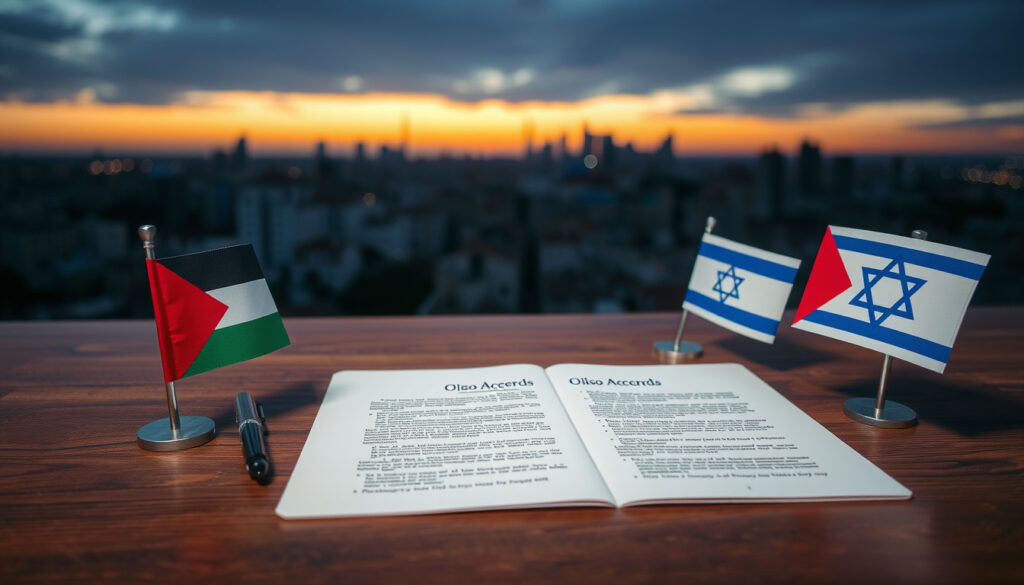
Few figures in modern history provoke as much division as Yasser Arafat. He led the Palestinian national movement for 35 years, signed the Oslo Accords with Israel in 1993, and won a Nobel Peace Prize — only to die under a cloud of controversy, with questions about his final years still lingering.
Born: August 4/24, 1929 (Cairo) · Died: November 11, 2004 (Paris) · PLO Chairman: 1969–2004 · Nobel Peace Prize: 1994 (shared with Peres and Rabin) · President of Palestinian Authority: 1996–2004
Quick snapshot
- Arafat recognized Israel in the 1993 Oslo Accords (Brookings (nonpartisan think tank))
- He shared the 1994 Nobel Peace Prize (Emory University (academic research))
- He died on November 11, 2004 in Paris (Brandeis University (higher education))
- Whether Arafat was poisoned (French investigation dropped in 2015)
- Extent of his direct involvement in planning the Second Intifada
- His true net worth (estimates vary widely)
- 1988: PLO declares state of Palestine (UCLA Nazarian Center (university research))
- 1993: Oslo Accords signed (Brandeis University)
- 2000: Second Intifada begins (UCLA Nazarian Center (university research))
- Ongoing debate over Arafat’s legacy and Palestinian statehood
- Continued efforts to achieve a two-state solution
The table below gathers the basic biographical markers that frame Arafat’s public life.
| Full Name | Mohammed Yasser Abdel Rahman Abdel Raouf Arafat al-Qudwa al-Husseini |
| Born | August 4/24, 1929, Cairo, Egypt |
| Died | November 11, 2004, Paris, France |
| Known For | Chairman of the PLO, President of the Palestinian Authority |
| Awards | Nobel Peace Prize (1994) |
Did Yasser Arafat recognize Israel?
In 1993, as part of the Oslo Accords, Arafat sent a letter to Israeli Prime Minister Yitzhak Rabin stating that the PLO recognized the right of the State of Israel to exist in peace and security, according to a reprint hosted by Columbia University / Foreign Affairs (academic journal). Brandeis University (research institution) described this as a “mutual recognition” agreement: Israel recognized the PLO as the legitimate representative of the Palestinian people, and the PLO recognized Israel’s right to exist.
However, the Columbia / Foreign Affairs article notes that Arafat’s language carefully avoided recognizing Israel as the nation‑state of the Jewish people — a nuance that would fuel later criticism.
Was Yasser Arafat a Zionist?
Arafat never identified as a Zionist. During his 1974 address to the UN General Assembly, he said: “I come bearing an olive branch and a freedom fighter’s gun. Do not let the olive branch fall from my hand.” Many scholars interpret his recognition of Israel as a pragmatic political move, not an ideological shift toward Zionism. According to UCLA’s Nazarian Center (university research center), the Oslo bargain was an exchange — Arafat agreed that the PLO would recognize Israel in return for U.S. and Israeli recognition of Arafat as leader of the Palestinians.
The catch: this ambiguity allowed critics on all sides to claim Arafat never fully accepted Israel.
Why is Arafat controversial?
The controversy around Arafat spans corruption, authoritarianism, and his role during the Second Intifada. A thesis hosted by the American University in Cairo (academic repository) argues that the Palestinian Authority’s authoritarian features were a direct result of the Oslo order and persisted after Arafat’s death.
Critics, including former Israeli Prime Minister Benjamin Netanyahu, repeatedly condemned Arafat as an obstacle to peace. Supporters, however, view him as a revolutionary who refused to compromise on core issues — Jerusalem, refugees, and borders — and as a symbol of Palestinian resistance.
Arafat won a Nobel Peace Prize for signing the Oslo Accords, yet he never achieved the state he promised. That gap between recognition and settlement defines his contested legacy.
The pattern: controversy follows from the gap between his diplomatic achievements and the absence of a final settlement.
What is Yasser Arafat famous for?
Arafat is best known for co‑founding Fatah in 1959, leading the PLO for 35 years, signing the Oslo Accords, and winning the 1994 Nobel Peace Prize alongside Yitzhak Rabin and Shimon Peres. According to Brandeis University, the three were the “chief architects” of the Oslo Accords. Arafat also became the first President of the Palestinian Authority in 1996. An Emory University (academic publication) describes him as the “symbolic embodiment” of the Palestinian national cause.
Are PLO and Hamas the same?
No — they are fundamentally different organizations. The table below summarizes the key contrasts.
Three core differences, one pattern: secular vs. Islamist, recognition vs. rejection of Israel, and different methods.
| Feature | PLO (led by Arafat) | Hamas |
|---|---|---|
| Ideology | Secular nationalist (under Arafat, Fatah-led) | Islamist (Muslim Brotherhood affiliate) |
| Stance on Israel | Recognized Israel in 1993 (Brookings) | Rejects Israel’s right to exist |
| Methods | Negotiations, diplomacy, PA governance | Armed resistance, suicide bombings, rocket attacks |
| International Status | Recognized by the UN and many states | Designated a terrorist group by many countries |
The PLO is a secular umbrella group established in 1964; Hamas emerged during the First Intifada in 1987 and opposed Oslo. Emory University notes that Arafat’s PLO sought international legitimacy, while Hamas rejected the peace process entirely.
The implication: the division between PLO and Hamas continues to undermine unified Palestinian leadership.
Was Palestine ever a country before Israel?
The region known as Palestine was a geographic area under Ottoman rule until 1917, then a British Mandate until 1948. Before 1948, there was no independent Palestinian state, though a distinct Palestinian identity existed. The 1948 Arab‑Israeli war led to the establishment of Israel and the displacement of hundreds of thousands of Palestinians — an event Palestinians call the Nakba (“catastrophe”).
Who lived in Palestine first, Jews or Muslims?
Both Jewish and Arab populations have lived in the region for millennia. Jewish presence dates back to ancient kingdoms; Muslim presence expanded after the 7th‑century Islamic conquests. By the late 19th century, the land’s population was predominantly Arab, with a growing Jewish minority due to Zionist immigration.
Did Jews take Israel away from Palestinians?
The 1947 UN Partition Plan proposed separate Jewish and Arab states. Jewish leaders accepted it; Arab leaders rejected it. War followed, resulting in an Israeli state on more territory than the plan proposed, and no Palestinian state was established. Brookings (policy research) describes the Oslo process as an attempt to resolve this conflict through mutual recognition, but a final‑status agreement was never reached.
Timeline signal
- 1929 – Born in Cairo
- 1959 – Co‑founded Fatah in Kuwait
- 1969 – Elected Chairman of the PLO
- 1974 – Addresses UN General Assembly
- 1988 – PLO declares state of Palestine (UCLA Nazarian Center)
- 1993 – Signs Oslo Accords with Israel (Brandeis University)
- 1994 – Awarded Nobel Peace Prize (Emory University)
- 1996 – Elected President of the Palestinian Authority
- 2000 – Second Intifada begins
- 2004 – Dies in Paris military hospital
The pattern: Arafat’s timeline tracks his journey from revolutionary to negotiator, but his death left key milestones unresolved.
Confirmed facts vs. what’s unclear
Confirmed facts
- Arafat recognized Israel in the 1993 Oslo Accords
- He shared the 1994 Nobel Peace Prize
- He died on November 11, 2004 in Paris
What’s unclear
- Whether Arafat was poisoned (French investigation dropped in 2015)
- Exact extent of his involvement in planning the Second Intifada
- His true net worth (estimates range widely)
The catch: the gap between confirmed facts and lingering questions fuels ongoing debate.
Key quotes
“I come bearing an olive branch and a freedom fighter’s gun. Do not let the olive branch fall from my hand.”
— Yasser Arafat, address to the UN General Assembly, 1974
“Arafat was a complex figure who could be tough but also pragmatic.”
— Shimon Peres (as recalled by Brandeis University)
“Arafat was an obstacle to peace.”
— Benjamin Netanyahu (repeatedly, as summarized by multiple sources)
Arafat’s legacy remains deeply contested. For Palestinians, he is the father of a national movement who brought their cause to the world stage but died without a state. For Israelis and many international observers, he is the man who said yes to Oslo but never delivered the final peace. The implication is stark: the Oslo framework he helped build has not led to a Palestinian state, and the questions he left unanswered — borders, refugees, Jerusalem — still define the conflict. For today’s Palestinian leadership, the unfinished business of statehood is both a political challenge and a historical judgment: finish what Arafat started, or watch the window close.
Frequently asked questions
What was Yasser Arafat’s religion?
He was a Sunni Muslim. His full name includes al-Husseini, indicating a claimed lineage from the Prophet Muhammad’s family.
How did Yasser Arafat die?
He died on November 11, 2004 at a military hospital in Paris. The cause was officially a massive hemorrhagic stroke, but suspicions of poisoning persist. A French investigation was dropped in 2015 for lack of evidence.
Did Yasser Arafat have children?
Yes, he had one daughter, Zahwa, born in 1995 to his wife Suha Arafat.
What was Yasser Arafat’s net worth?
Estimates vary widely — from tens of millions to several billion dollars — though no verified accounting exists. Many corruption allegations center on secret PA funds controlled by Arafat.
Was Yasser Arafat considered a terrorist?
Many governments and media outlets labeled him a terrorist before Oslo; after Oslo he was treated as a statesman. The U.S. and Israel only recognized him after his formal renunciation of terrorism in 1993. The debate persists: critics point to his ties to militant groups, supporters argue he was a resistance leader.
What is the PLO?
The Palestine Liberation Organization is a secular umbrella group founded in 1964. Under Arafat’s leadership from 1969, it became the main representative of the Palestinian national movement and signed the Oslo Accords.
What is Fatah?
Fatah is the largest faction within the PLO, founded by Arafat and others in 1959. It is a secular nationalist party and has dominated the Palestinian Authority since its creation.
Did Yasser Arafat recognize Israel’s right to exist?
Yes — in his 1993 letter to Yitzhak Rabin as part of the Oslo Accords, the PLO recognized the right of the State of Israel to exist in peace and security. However, he did not explicitly recognize Israel as the nation‑state of the Jewish people.
More related posts
 How to Backup Photos to Cloud – Step-by-Step 2025 Guide
 PBKS vs MI Rain Threat: Venue Shift & Washout Rules
 Treat Williams: Death, Tributes & Driver’s Guilty Plea
 Andy Roddick: Career, Retirement, Life After Tennis
 Lauren Lane Biography: Net Worth, Husband, Baby & Teaching Career
 Scottie Pippen: NBA Career, Net Worth, Rings, and Life Today
 Pokémon Packs: Buying Guide, Prices, and Expansions (2025)