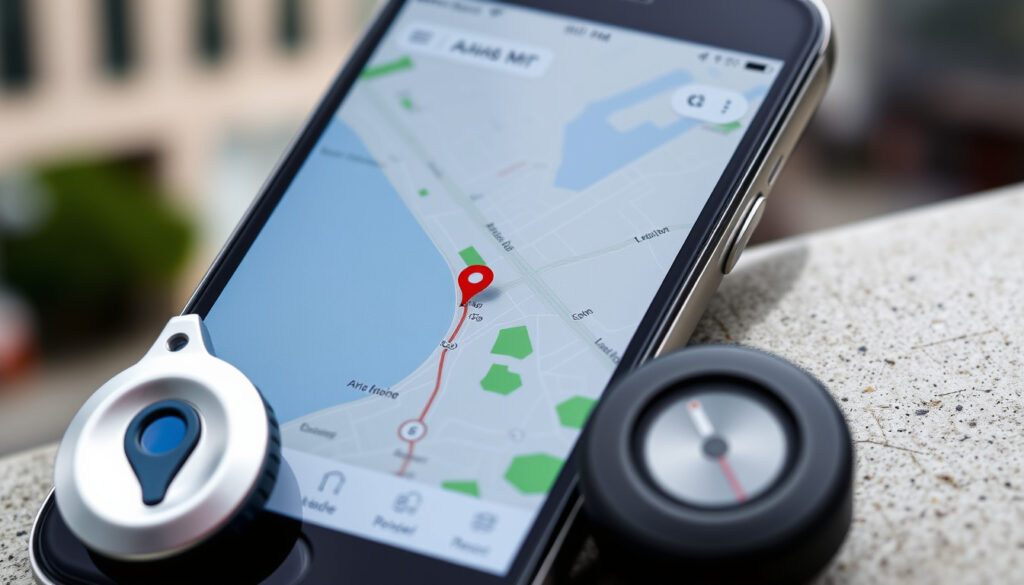
GPS Tracker Guide: Free vs Paid, AirTag & Detection
Few everyday gadgets spark as much curiosity—and confusion—as GPS trackers. Whether you are trying to keep tabs on a car, worried about a hidden device, or just wondering if an AirTag counts as a tracker, the options and claims can feel overwhelming. This guide cuts through the noise, comparing free and paid trackers, explaining how detection actually works, and laying out real-world costs so you can decide what fits your situation.
Global GPS tracker market size (2024): $3.2 billion ·
Average battery life of GPS trackers: Up to 6 months ·
Apple AirTag Bluetooth range: Up to 30 meters (100 ft) ·
Number of GPS tracker brands available: Over 50 ·
Typical cost of a basic GPS tracker: $20 – $100
Quick snapshot
- Real-time GPS trackers require a cellular or satellite connection for live tracking (PAJ GPS, GPS tracking specialist)
- Apple AirTag uses Bluetooth and the Find My network, not GPS (same source)
- Most dedicated GPS trackers carry a recurring monthly fee of $10–$30 (BrickHouse Security, security technology retailer)
- Whether free GPS tracker apps drain significantly more mobile data than paid options (Lightning GPS, GPS industry analyst)
- Exact number of hidden trackers detected by phone-based Bluetooth scanning alone (EFF Surveillance Self-Defense, digital privacy advocacy group)
- Car and Driver’s 2026 roundup notes that some trackers now offer the device free with a long-term subscription (Car and Driver, automotive testing authority)
- Newer RF and Bluetooth trackers are adding ultra-wideband for better precision (PAJ GPS)
- Expect more hybrid models that combine free cellular trial periods with optional subscriptions (CarLock, vehicle tracking provider)
- Regulatory pushes in the EU and US may require standardised anti-stalking alerts on all Bluetooth trackers (EFF)
The table below reveals one pattern: dedicated GPS trackers deliver real-time coverage but at an ongoing cost, while Bluetooth alternatives trade range for a one-time purchase.
| Specification | Value |
|---|---|
| GPS tracker cost range | $20 – $400 |
| Average battery life (dedicated GPS) | 2 weeks – 6 months |
| AirTag battery life | 1 year (CR2032 coin cell) |
| Typical monthly subscription (dedicated GPS) | $10 – $30 per month |
| Lowest real-time GPS subscription | $6.99 per month (BrickHouse Security) |
| Real-time tracking requires | Cellular or satellite data plan (PAJ GPS) |
| Bluetooth finder (AirTag) max range | ~30 meters (100 ft) via Bluetooth; unlimited via crowd network (PAJ GPS) |
| Detection method (Bluetooth) | Phone scanning apps (EFF) |
| Detection method (cellular GPS) | RF detector or physical search (BrickHouse Security) |
| Free tracking apps | Usually rely on phone GPS + cellular; drain data (Lightning GPS) |
| Prepaid bundled data models | Include data for a fixed period, then require renewal (PAJ GPS) |
| Total cost of ownership (3 years) | $150–$1,080 (device + subscription) vs $30 (AirTag) (PAJ GPS) |
Is there a GPS tracker without a monthly fee?
Many products marketed as “no monthly fee GPS trackers” are actually Bluetooth item finders, RF trackers, or GPS trackers with prepaid data bundled for a limited period rather than truly subscription-free real-time GPS devices (PAJ GPS). Real-time GPS tracking generally requires a SIM card and ongoing cellular data costs because the tracker must send location data over a mobile network (same source).
What free GPS tracker apps are available?
- Google Find My Device, Apple Find My (crowd-sourced, not real-time GPS for non-Apple items)
- Life360 (free tier, limited location updates)
- GPS Phone Tracker app (uses phone’s own GPS and cellular data)
- Free apps rely on your phone’s battery and data plan; they are not separate tracker devices.
According to Lightning GPS (GPS tracking analyst), no-subscription trackers may avoid monthly fees by using bundled lifetime SIMs, direct radio communication, or internal logging for later download. The catch: those with internal logging do not provide live location.
How to find GPS trackers with no subscription
- Look for “lifetime SIM” or “prepaid data included” in product specs.
- Examples: some models from Trak-4, Spytec, and LandAirSea offer prepaid data for 1–2 years, after which you pay per top-up.
- Be aware that “free” usually means Bluetooth-only or limited range.
The pattern: a true GPS tracker with real-time alerts and cloud access almost always carries a monthly expense. The central cost comparison is total cost of ownership over two to three years rather than sticker price alone (PAJ GPS).
A buyer who buys a $50 “no subscription” tracker might end up paying $300 in top-ups over 2 years if they want real-time alerts. The same buyer could spend $30 on an AirTag and replace the battery yearly for $5.
Which is better, AirTag or GPS?
Apple AirTag is not a GPS tracker. It uses Bluetooth and the Find My network of hundreds of millions of Apple devices to report its location when another device passes within 30 meters (PAJ GPS). A dedicated GPS tracker uses cellular or satellite networks and can provide real-time updates anywhere with coverage.
Will my husband know if I put an AirTag in his car?
Apple designed AirTag with anti-stalking alerts. If an unknown AirTag moves with a person, their iPhone will show a notification: “AirTag Found Moving With You.” Android users can use the “Tracker Detect” app to scan for nearby AirTags (EFF, digital privacy advocacy group). So yes – it is very likely the person will know if you place an AirTag in their car without consent.
How far away can AirTag track?
AirTag has a Bluetooth range of about 30 meters (100 feet) for direct communication. Beyond that, it relies on any nearby Apple device to pick up its signal and relay the location via the Find My network. So the tracking range is effectively unlimited as long as there are other Apple devices around. In remote areas, the AirTag may not update for hours or days.
Dedicated GPS trackers, by contrast, use cell towers or satellites and can update every few seconds or minutes regardless of nearby smartphones. They also typically come with Web dashboards, geofences, and speed alerts.
The implication: AirTag is best for items that stay in populated areas and where real-time updates are not critical. Dedicated GPS is essential for assets in remote locations or when you need immediate alerts.
The main differences between these two categories boil down to four key dimensions.
| Feature | Apple AirTag | Dedicated GPS Tracker |
|---|---|---|
| Real-time updates | No (crowd-sourced, delay of minutes to hours) | Yes (every 10s–5min) |
| Monthly fee | $0 | $10–$30/month |
| Replacement battery | $5/year (CR2032) | Often built-in rechargeable |
| Range | ~30m direct; global via crowd | Cellular/satellite coverage area |
| Anti-stalking alerts | Built-in (iOS + Android app) | None (unless app-added) |
| Suitable for vehicles | Possible but detectable | Yes, with hidden placement |
For an everyday user who wants to keep track of keys or a bag, AirTag is cheaper and easier. For anyone who needs reliable, real-time vehicle tracking without detection risk, a dedicated GPS tracker with a subscription is the only real option.
Can my phone detect a GPS tracker?
It depends on the type of tracker. Bluetooth trackers (AirTag, Tile) can be detected using phone apps because they emit Bluetooth signals that can be scanned. Cellular GPS trackers, however, do not broadcast Bluetooth and are much harder for a phone to detect on its own.
Can I detect if someone put a tracker in my car?
- For Bluetooth trackers: Use apps like Apple’s “Find My” (iPhone), “Tracker Detect” (Android), or “Wunderfind.” The EFF Surveillance Self-Defense guide walks through scanning steps.
- For cellular GPS trackers: Your phone cannot detect them via Bluetooth. Use an RF detector or a physical search. BrickHouse Security’s guide recommends checking under bumpers, wheel wells, and the dashboard for small magnetised or wired devices.
- Physical clues: Unusual battery drain on your car, a small box with a magnetic back, or strange wiring under the dashboard (SREcon, vehicle security resource).
Can my boyfriend track my phone without me knowing?
Phone tracking without consent typically requires installing a spy app on your phone (which your boyfriend would need physical access to install) or using a service like Find My with shared location. Check your phone’s location settings and revoke location sharing for unrecognised apps. On iPhone, go to Settings > Privacy > Location Services > System Services > Significant Locations. On Android, check Settings > Location > App location permissions.
What this means: a phone-based tracker leaves digital traces you can see, while a hidden GPS tracker on a car leaves physical or RF clues but no phone notification. The methods differ completely.
If you find an unknown tracker on your vehicle, do not touch or remove it alone. Document it with photos and contact local law enforcement. Many hidden trackers are used in stalking or domestic abuse situations.
What is the best GPS tracker device?
“Best” depends on what you are tracking and your willingness to pay a subscription. Below are top-rated devices across three categories, based on expert reviews from Car and Driver and BrickHouse Security.
Best GPS tracker for cars
- LandAirSea 54: Waterproof, magnetic case, battery lasts up to 2 weeks, subscription $19.95/month. Popular for vehicle tracking (BrickHouse Security).
- Spytec GL300: Compact, up to 25 days battery, $24.95/month plan. Often rated best overall fleet tracking (Car and Driver).
- Vyncs GPS Tracker: OBD-II plug-in, real-time alerts, $10/month (lowest subscription). Good for easy installation (Car and Driver).
Best GPS tracker for pets
- Whistle Go Explore: GPS + cellular, health monitoring, $12.95/month. Waterproof, activity tracking, good battery (20 days) (Car and Driver).
- Fi Series 3: GPS + LTE-M, $19/month, very long battery (up to 3 months) for dogs. Lightweight collar attachment (Car and Driver).
Best GPS tracker for personal use
- Apple AirTag: Best for keys, wallet, bags – no subscription, precise within room once nearby. No real-time remote tracking.
- Tile Pro: Bluetooth range up to 400 ft, replaceable battery, community find network. No subscription for basic use; premium $2.99/month for alerts.
- Garmin inReach Mini 2: Two-way satellite messaging and GPS, SOS capability, $11.95/month plan. Best for wilderness.
The trade-off: devices without subscriptions limit your tracking capabilities. For peace of mind with real-time updates, budget $20–$35/month.
How do I put a tracker on my car for free?
You can track a car without spending on a dedicated device by turning an old smartphone into a GPS tracker. This approach uses the phone’s own GPS and cellular data but requires a SIM card with an active data plan (even a cheap prepaid plan works).
Using a free GPS tracking app on your phone
- Find an old Android or iPhone with a working battery and a SIM card that supports data (minimum 1GB/month).
- Install a tracking app such as Google Find My Device (Android) or Apple Find My (iPhone). On Android, you can also use “GPS Phone Tracker” or “Family Locator” (free with ads).
- Place the phone under the car seat or in the glovebox – ensure it is charged and hidden from direct sunlight to prevent overheating.
- Log into the same account from your main phone to see the vehicle’s location. Some apps allow geofence alerts.
Pros: Zero hardware cost, no monthly fee beyond the SIM (some carriers offer plans as low as $5/month). Cons: Phone battery lasts 1–2 days; you must keep it plugged in if the car is used daily. Phone can be detected if the hidden device rings or vibrates (SREcon).
Using a cheap GPS tracker with no monthly fee
- Some trackers, such as the “Tracker with Lifetime SIM” from Trak-4, include data for life but cost $70–$150 upfront. The SIM uses a prepaid pool that may be throttled after a certain data cap.
- Check the fine print: “Lifetime SIM” often means the manufacturer provides data at low speed or limited number of updates per month.
- For true free tracking, the old-phone method is the only reliable option – but be aware of legal restrictions in your state or country regarding placing a tracker on a vehicle you do not own.
Placing a tracker on someone else’s car without their consent is illegal in many jurisdictions, including most US states (federal law under 18 U.S.C. § 2510). Penalties include fines and imprisonment. Only track vehicles you own or have written permission for.
What is the best GPS tracker for sports?
Sports GPS trackers focus on performance metrics such as speed, distance, heart rate, and route mapping rather than theft recovery. They are often worn or attached to equipment.
GPS trackers for football
- STATSports Apex: Used by professional clubs, provides GPS, heart rate, and impact data. Requires subscription (per-player costs can exceed $500/year). Accurate within 1 meter.
- Catapult OptimEye: Similar to STATSports, worn in a vest, tracks acceleration, deceleration, and player load. Subscription-based.
GPS trackers for cycling
- Garmin Edge 540: Handlebar-mounted computer with GPS, maps, and training metrics. No subscription for basic navigation; premium features require Garmin Connect ($5.99/month). Battery 42 hours.
- Wahoo ELEMNT ROAM V2: GPS computer with turn-by-turn navigation, ANT+ and Bluetooth sensors. No subscription needed.
GPS watch vs dedicated tracker
- Watches (Garmin Forerunner 265/965, Apple Watch Ultra): All-in-one training and activity tracker. No separate device to carry, but battery life 1–7 days. Not trackable remotely if lost.
- Dedicated trackers (e.g., Airtag attached to bike): Only useful for recovery, not performance. Not designed for impact or waterproof extremes.
The implication: serious athletes pay $300–$600 for a dedicated sports GPS device. Casual fitness fans can use a smartphone with free apps like Strava or Nike Run Club – which use the phone’s GPS and are surprisingly accurate at tracking distance and pace.
A $500 Garmin watch gives you lap splits and heart rate zones but disappears if you drop it on the trail. A $30 AirTag that stays with your gear will help you recover it but won’t tell you how fast you ran.
Confirmed facts
- GPS trackers require cellular/satellite connection for real-time tracking (PAJ GPS)
- Apple AirTag uses Bluetooth + Find My network, not GPS (PAJ GPS)
- Most dedicated GPS trackers have monthly subscription $6.99–$34.99 (BrickHouse Security)
What’s unclear
More related posts
 Man United vs Burnley: TV channel, team news & match preview
 Countries in South America: Complete List, Map, and Facts
 Adam Gilchrist: Net Worth, Retirement & $380M Mistake
 Woo Do-Hwan: Personal Life, Skills, and Career Facts
 Ollie Bearman: F1 Driver’s Biography, Crash, and Family
 Palace Cinemas Perth: Showtimes, Tickets, Location Guide
 Vermont Medical Clinic – Adult Primary Care in South Burlington
 Emma Watson: Personal Life, Health, Career – Facts and Rumors