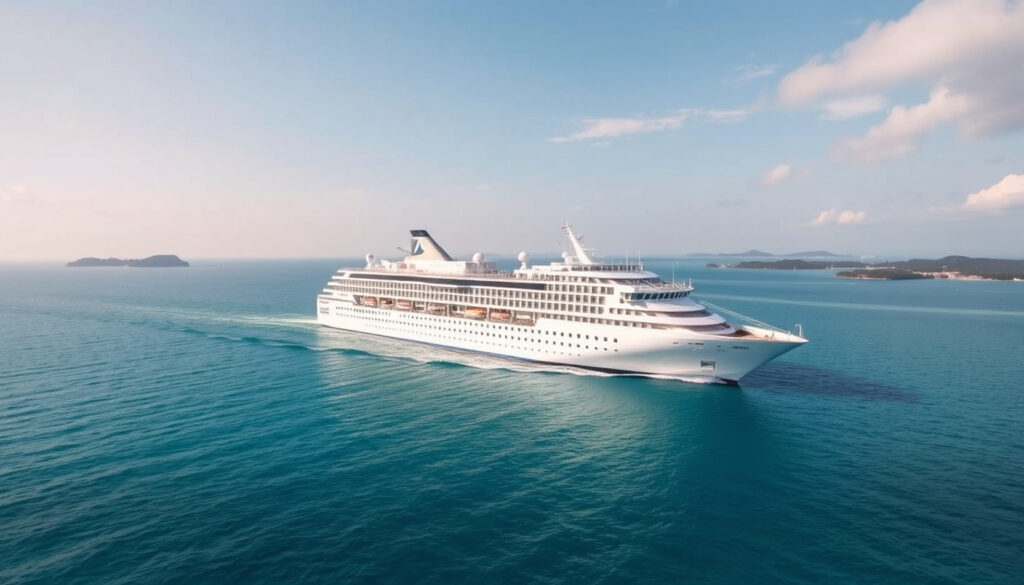
Royal Caribbean Cruises 2025: Guide to Rules, Costs & Best Ships
Planning your first Royal Caribbean cruise brings plenty of excitement and a few head-scratching questions. Between the “washy washy” greetings, the mysterious wife-on-board jokes, and the ever-present 3-1-1 rule, it helps to have a clear guide. This piece walks through the practical details that matter most—what you pay, how you pack, and which ship fits your trip.
Royal Caribbean ships in fleet (2025): 28 ·
Annual passengers (approx.): 6.5 million ·
Cheapest month historically: January ·
Standard carry-on liquid limit (TSA 3-1-1): 3.4 oz (100ml) per container ·
Founded: 1968 ·
Headquarters: Miami, Florida, USA
Quick snapshot
- Royal Caribbean operates 28 ships as of 2025 (Royal Caribbean Ireland Booking Conditions)
- TSA 3-1-1 rule applies to carry-on luggage on US departures (TSA official guidelines)
- January is historically the cheapest month for Caribbean cruises (NerdWallet analysis)
- Icon of the Seas (2024) is the world’s largest cruise ship at 250,800 GT (Wikipedia entry on Icon of the Seas)
- Exact drink package pricing varies by ship and season (YouTube: Cruise pricing breakdown)
- Specific in-port health regulations may affect food safety guidelines (YouTube: Cruise pricing breakdown)
- 1968: Royal Caribbean Cruise Line founded (Wikipedia entry on Royal Caribbean International)
- 2024: Icon of the Seas launched, largest cruise ship ever (Wikipedia entry on Royal Caribbean International)
- Star of the Seas debuts 2025 as second Icon-class ship (Royal Caribbean official ship page)
- 2026 Mediterranean itineraries now available for booking (Royal Caribbean official ship page)
Six key specs shape the Royal Caribbean experience. One pattern: the fleet spans from intimate ships for couples to mega-resorts carrying over 7,000 passengers.
| Attribute | Value | Source |
|---|---|---|
| Fleet size (2025) | 28 cruise ships | Wikipedia entry on Royal Caribbean International |
| Year founded | 1968 | Wikipedia entry on Royal Caribbean International |
| Headquarters | Miami, Florida, USA | Wikipedia entry on Royal Caribbean International |
| Parent company | Royal Caribbean Group (NYSE: RCL) | Wikipedia entry on Royal Caribbean Group |
| Largest ship | Icon of the Seas (2024, 250,800 GT) | Wikipedia entry on Icon of the Seas |
| Annual passengers | Approx. 6.5 million | Royal Caribbean Ireland Booking Conditions |
What is the 3-1-1 rule on Royal Caribbean cruises?
The 3-1-1 rule is a TSA regulation that governs liquids in carry-on luggage. All containers must be 3.4 ounces or less and fit inside a single quart-size clear bag. — TSA official guidelines
The 3-1-1 rule is a TSA (US Transportation Security Administration) regulation that governs liquids in carry-on luggage. It applies to all passengers flying to a Royal Caribbean departure port, not just US citizens.
What counts as a liquid under TSA rules?
- Liquids, aerosols, gels, creams, and pastes all fall under the rule (TSA official guidelines)
- Each container must be 3.4 ounces (100 ml) or less
- All containers must fit inside a single quart-size clear zip-top bag
- One bag per passenger
Can I bring larger toiletries in checked luggage?
- Yes—checked bags allow full-size containers like sunscreen, shampoo, and mouthwash (TSA official guidelines)
- Royal Caribbean follows TSA guidelines for US departures
- For European departures, EU liquid restrictions (up to 100ml per container, single 1-liter bag) apply (European Commission aviation security)
The pattern: your departure airport dictates your liquid rules—Dublin means EU limits, US airports mean TSA limits. Check before you pack.
What is the cheapest month to go on a Royal Caribbean cruise?
January consistently offers the lowest fares for Caribbean cruises. The post-holiday lull combined with off-peak weather creates a sweet spot for budget-conscious travelers. — NerdWallet analysis
January consistently offers the lowest fares for Caribbean cruises. The post-holiday lull combined with off-peak weather creates a sweet spot for budget-conscious travelers.
Are there seasonal price differences for Caribbean cruises?
- January is typically the cheapest month due to post-holiday demand drop and favorable Caribbean weather (NerdWallet analysis)
- September and early November also offer lower prices but coincide with hurricane season (NerdWallet analysis)
- Summer and Christmas holidays command peak pricing—expect 30–50% more than January fares
How far in advance should I book to get the best deal?
- Booking 6–12 months ahead often secures lower fares (NerdWallet analysis)
- Last-minute deals (within 60 days) can be cheaper for unsold cabins, but selection is limited
- For Ireland bookings, deposits are €100 per person for 1–5 nights, €165 for 6–9 nights, and €165 for 10–14 nights (Royal Caribbean Ireland Booking Conditions)
- Suites require a non-refundable deposit of 10% of the cruise fare based on double occupancy
The trade-off: off-peak pricing saves money but carries weather risk. September and October cruises are cheaper—but a hurricane reroute is a real possibility. For European itineraries, shoulder seasons (April–May, September–October) offer the same pattern.
Which Royal Caribbean cruise ship is the best?
“Best” depends on who you’re traveling with. The fleet spans from the massive Icon of the Seas to smaller, quieter ships designed for adults.
What are the top ships for families?
- Icon of the Seas (2024) is the newest and largest, with six waterslides, a kid’s aqua park, and family-friendly neighborhoods (Wikipedia entry on Icon of the Seas)
- Oasis-class ships (Symphony, Wonder, Harmony) feature boardwalk areas, carousels, and Broadway-style shows (Wikipedia entry on Oasis-class cruise ship)
- Wonder of the Seas (2022) is the second-largest ship globally and has broad family appeal
Which ship is best for adults or couples?
- Smaller ships like Serenade of the Seas or Brilliance of the Seas offer quieter, more intimate experiences (Wikipedia entry on Royal Caribbean fleet)
- Radiance-class ships have panoramic views and relaxed atmospheres, ideal for adults
- For Mediterranean itineraries, smaller ships can access ports mega-ships cannot
The pattern: families with kids should book Icon or an Oasis-class ship for built-in entertainment. Adults wanting a quieter trip should pick a Radiance-class ship. No single ship serves both groups equally well.
What does washy washy mean on a cruise ship?
First-time passengers often notice the cheerful “Washy washy!” greeting near dining areas. It’s one of Royal Caribbean’s quirkiest traditions.
Who is the “Washy Washy” person?
- Crew members stationed at buffet and dining entrances sing “Washy washy” while offering hand sanitizer (Wikipedia entry on Royal Caribbean culture)
- It became a popular catchphrase on Royal Caribbean ships and is often memorably delivered
- The phrase reinforces the line’s hygiene protocols in a lighthearted way
Is hand sanitizer mandatory on Royal Caribbean?
- Hand hygiene stations are provided and encouraged at dining venues
- While not strictly mandatory, crew members actively remind passengers to sanitize
- During norovirus outbreaks, sanitization becomes mandatory and monitored
The catch: “Washy washy” is playful marketing for a serious hygiene protocol. Norovirus spreads quickly on cruise ships, and hand sanitizer reduces risk significantly. The song makes compliance feel friendly—not clinical.
What are five foods to avoid on a cruise?
Buffet dining is convenient, but some items carry risks. These tips apply to Royal Caribbean and cruise ships generally.
Which buffet items are best to skip?
- Raw or undercooked seafood (oysters, ceviche) unless served fresh and immediately (CDC Vessel Sanitation Program)
- Food left at room temperature for extended periods—avoid items that look dried or crusted
- Unpeeled fresh fruit in regions with questionable sanitation practices
- Dishes with runny eggs (Hollandaise sauce) if temperature-holding isn’t visible
- Buffet items that have been sitting out during peak sun hours on outdoor decks
Are there any safety concerns with cruise food?
- Stick to freshly cooked items and reputable dining venues on board
- Royal Caribbean’s main dining room uses stricter temperature control than buffet stations
- Hand washing before meals is the best prevention
Buffet convenience comes with reduced temperature control. For Irish travelers used to hot breakfasts, the dining room delivers consistency. The buffet works for quick bites—but skip seafood if it looks questionable.
The implication: stick to main dining rooms for hot meals and treat the buffet as a backup, not a primary option.
What does “wife on board” mean on a cruise ship?
This phrase pops up in cruise forums and social media, but it’s not an official Royal Caribbean term.
Is “wife on board” an official term?
- No—it is not an official Royal Caribbean term or policy
- The phrase is a humorous or informal nickname used among passengers
- Some cruisers use it to describe traveling with their spouse, playing on “wife” vs. “girlfriend” dynamics
What does the phrase refer to in cruise culture?
- In cruise forums, it often appears as a joke about spousal dynamics on board
- It has no connection to any safety protocol, reservation status, or passenger category
- Treat it as cruise community slang—harmless but not official
What this means: if you hear “wife on board” from a crew member, it’s likely a joke, not a policy. No need to take action or worry.
For Irish first-timers, distinguishing real rules from cruise folklore saves confusion. “Wife on board” is folklore. The 3-1-1 rule and deposit deadlines are real policies with actual consequences.
How to plan your Royal Caribbean cruise: step by step
- Choose your travel season and book 6–12 months ahead for the best fares—January offers the lowest Caribbean prices
- Select your ship based on travel group: Icon or Oasis-class for families, Radiance-class for couples
- Review the TSA 3-1-1 rule for US departures or EU 1-liter limit for Dublin departures and pack accordingly
- Budget $80–$120 per person per day beyond the cruise fare for gratuities, drinks, and excursions
- Pay your deposit (€100–€490 depending on cruise length) and review cancellation terms before the 45-day penalty window
Upsides
- All-inclusive base fare (meals, accommodation, entertainment, taxes) simplifies budgeting
- Wide variety of ships and itineraries suits families, couples, and solo travelers
- Deposits from Ireland are modest (€75–€490 depending on length) (Royal Caribbean Ireland Booking Conditions)
- Cancellation policies are transparent with clear penalty tiers
- Drinks packages and excursions can be prepaid—no surprises on board
Downsides
- Gratuities ($18–$21 per person per day) are automatic and add $250–$300 for a 7-night couple (NerdWallet analysis)
- Drinks package not included; cocktails cost $12–$16 each (YouTube: Cruise pricing breakdown)
- Shore excursions, spa, laundry, and photos are extra
- Cancellation penalties kick in after 45 days (50–75% of fare) (Royal Caribbean Ireland Booking Conditions)
- Ship size can feel overwhelming on mega-ships during peak seasons
royalcaribbeanblog.com, royalcaribbean.com, royalcaribbean.com, royalcaribbean.com, royalcaribbean.com
For those interested in the line’s newest flagship, Icon of the Seas details offers a comprehensive look at itineraries and pricing.
Frequently asked questions
How do I book a Royal Caribbean cruise from Ireland?
You can book directly through Royal Caribbean’s Ireland website or via Irish travel agents. Deposits for standard staterooms start at €100 per person for short cruises (Royal Caribbean Ireland Booking Conditions).
What is the Royal Caribbean drinks package cost per day?
Prices vary by ship and season. The Deluxe Beverage Package typically runs $70–$90 per person per day, while the Refreshment Package (soft drinks, mocktails) costs around $30 per day (YouTube: Cruise pricing breakdown).
Can I bring my own alcohol on a Royal Caribbean cruise?
You may bring two 750ml bottles of wine per stateroom at embarkation. Beer and spirits are not permitted in carry-on luggage and will be confiscated until the end of the cruise (Royal Caribbean alcohol policy).
What is the dress code for dinner on Royal Caribbean?
Main dining rooms have a “cruise casual” dress code most nights (polo shirts, sundresses). The captain’s gala nights request cocktail attire or suits. Shorts and swimwear are not allowed in main dining rooms (Royal Caribbean dress code FAQ).
Do Royal Caribbean cruises include gratuities?
No—gratuities are automatically added at $18.50 per person per day for standard cabins and $21.00 for suites. You can prepay them to lock in current rates (NerdWallet analysis).
Are there Royal Caribbean cruises from Dublin or Ireland?
Royal Caribbean does not have a dedicated homeport in Dublin. Most Irish travelers fly to US ports (Miami, Fort Lauderdale) or European ports (Barcelona, Rome, Southampton) for departures. Fly-cruise packages from Ireland are available and based on the lowest available departure airport (Royal Caribbean Ireland Booking Conditions).
What is included in a Royal Caribbean cruise fare?
Your cruise fare includes cabin accommodation, all meals in main dining rooms and buffet, basic beverages (water, tea, coffee, lemonade), onboard entertainment, and relevant taxes. Not included: alcoholic drinks, specialty dining, shore excursions, gratuities, spa treatments, laundry, and telephone calls (Royal Caribbean Ireland Booking PDF).
How do I choose a Royal Caribbean Mediterranean itinerary?
Consider port variety, cruise length (7–14 nights typical), and time of year. Spring and autumn offer milder temperatures and fewer crowds. Smaller ships (Radiance class) access narrow ports; larger ships stick to major harbors. Royal Caribbean’s Mediterranean 2026 itineraries include Greece, Italy, Spain, and Croatia.
Royal Caribbean cruises deliver clear value when you know the rules: book 6–12 months ahead for January sailings, budget $80–$120 per person per day beyond the fare, and choose your ship by travel group size. For Irish travelers, the deposit structure and cancellation terms are straightforward—but gratuities and drink packages can double your total if ignored. The choice is clear: plan with a budget in hand, or let the add-ons surprise you.
More related posts
 Chat GPT Login Free – Step-by-Step Sign-In Guide
 Min Woo Lee: Ethnicity, Net Worth, and Viral Fame
 A Christmas Carol: Story, Ghosts & Best Film Versions
 Royal National Park: $12 Entry, Worth It, Day Guide
 Rosie O’Donnell: Ireland Move, Family, Feuds, and Biography
 Bren Foster Martial Arts: Real Black Belt Credentials
 Fifi Box: Biography, Career, Net Worth, and Personal Life
 Mimi Keene: Upcoming Movie, Relationship, and Career Facts