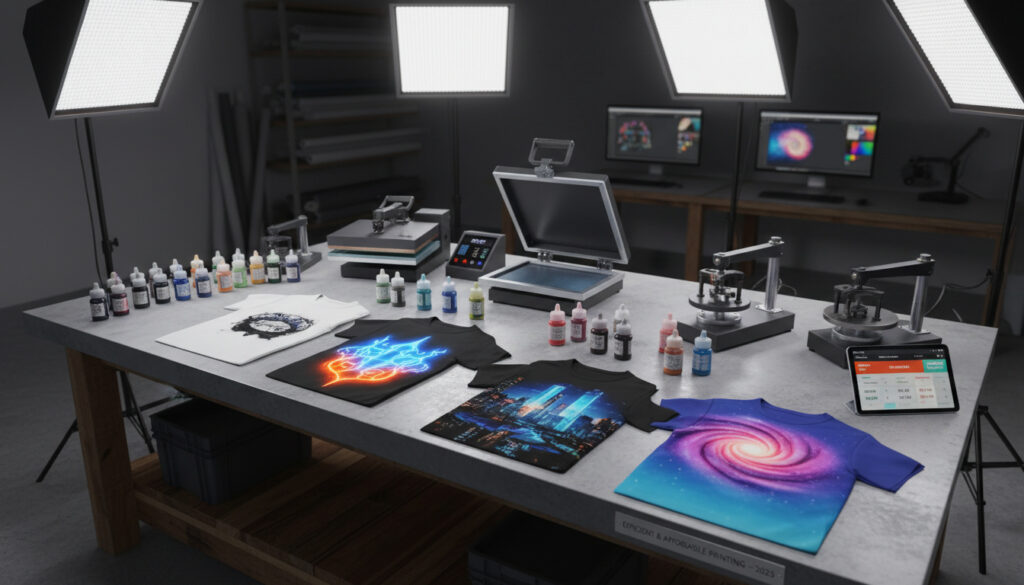
T-Shirt Printing – Best Methods and Costs in 2025
Custom t-shirt printing spans from industrial screen printing operations to desktop DIY setups, with five primary technologies dominating the market in 2025. Each method—screen printing, direct-to-garment (DTG), direct-to-film (DTF), heat transfer vinyl (HTV), and sublimation—offers distinct advantages depending on order volume, fabric type, and design complexity.
Selecting the appropriate technique requires balancing upfront equipment investments against per-unit costs and durability requirements. While screen printing remains the standard for bulk orders exceeding 100 units, newer digital methods like DTF and DTG have democratized access for small businesses and home-based entrepreneurs.
What Are the Best T-Shirt Printing Methods?
The optimal printing method depends on production scale, fabric compatibility, and artwork complexity. Screen printing excels in high-volume environments, while digital methods accommodate photographic detail and short runs.
- Screen Printing: High-volume production with exceptional durability and vibrant opaque colors
- DTG Printing: Photographic detail on 100% cotton without screen setup
- Vinyl/HTV: Accessible entry point for custom text and simple graphics with minimal startup costs
- Sublimation: All-over vibrant prints with photographic quality on polyester substrates
Key Insights on Method Selection
- Screen printing delivers the lowest per-unit cost for orders above 100 shirts despite high initial setup fees ranging from $500 to $2,000 per design
- DTF technology has emerged as the most versatile option for cotton, polyester, and dark fabrics without pretreatment requirements
- DTG remains limited to 100% cotton and requires expensive pretreatment processes and specialized pigment inks
- Vinyl heat transfer offers the lowest barrier to entry for home operations, requiring approximately $290 in basic equipment
- Sublimation provides photographic color quality but restricts printing to light-colored polyester garments
- Bulk pricing inversely correlates with setup complexity across all methods
- Hybrid business models combining DTF and screen printing are trending in 2025 for versatility
Comparative Analysis of Printing Methods
| Method | Ideal For | Setup Cost | Cost Per Unit (Low Vol.) | Cost Per Unit (High Vol.) | Durability | Fabric Compatibility |
|---|---|---|---|---|---|---|
| Screen Printing | Bulk orders (100+), simple designs | High ($500–$2,000) | Very High | Very Low | Very High (garment life) | Most fabrics |
| DTG | Complex full-color on cotton | Medium-High ($10,000–$30,000) | Moderate | High | Medium | 100% Cotton only |
| DTF | Small runs, any fabric | Low ($3,000–$8,000) | Moderate-High | Moderate | High (50+ washes) | Any fabric |
| Vinyl (HTV) | DIY/small orders | Low ($40 + $250 press) | High | High | High | Most fabrics |
| Sublimation | All-over prints | Medium | Moderate | Moderate-High | Medium | 100% Polyester (light colors) |
How Much Does T-Shirt Printing Cost?
Cost structures vary dramatically between low-volume custom orders and bulk production. For quantities between 1–50 shirts, vinyl heat transfer represents the most economical approach, with material costs starting around $40 plus a basic heat press. DTF and DTG occupy the middle tier for small batches, while screen printing becomes cost-prohibitive for low volumes due to setup charges.
At scale exceeding 100 units, screen printing inverts this equation, delivering the lowest per-unit costs in the industry. DTG and DTF costs rise at volume due to ink consumption and labor intensity. According to IrisDTF analysis, DTF film and powder expenses remain lower than DTG ink costs but exceed screen printing efficiencies for bulk orders.
Is T-Shirt Printing Profitable?
Profitability hinges on order volume and operational model. Screen printing and DTF generate substantial margins in bulk operations where per-unit costs drop below $2–$3. Home-based vinyl or DTF operations targeting print-on-demand markets typically realize $10–$20 profit per shirt, though labor costs for weeding and pressing must be factored. Industry data indicates that businesses factoring in labor automation achieve higher scalability than manual DTG or vinyl operations.
Orders under 50 units see vinyl as the cheapest entry point, while orders over 100 shirts trigger screen printing’s economy of scale, reducing per-unit costs by up to 80% compared to digital methods.
What Equipment Do I Need for T-Shirt Printing?
Equipment requirements scale with production ambitions. Entry-level vinyl operations demand a cutter ($200–$500) and heat press ($250). DTF startups require a specialized printer, heat press, and curing oven totaling $3,000–$8,000. DTG operations necessitate significantly higher capital, with commercial printers ranging from $10,000 to $30,000 plus pretreatment machinery. Screen printing setups for bulk production require $500–$2,000 per job for screens and presses.
How to Start a T-Shirt Printing Business?
New entrepreneurs increasingly favor DTF for its low entry barrier and fabric versatility. Unlike DTG, DTF requires no pretreatment and works on dark garments. Transfer Kingdom reports that hybrid businesses combining DTF for short runs with screen printing for bulk orders maximize equipment utilization rates.
For those documenting designs or transferring artwork files, proper digital asset management matters. Refer to the Convert HEIC to JPG Guide for handling iPhone photography in design workflows.
How to Print T-Shirts at Home?
Home printing typically employs vinyl heat transfer due to minimal space requirements and low toxicity. The process involves cutting designs from colored vinyl sheets, weeding excess material, and heat-pressing onto garments. Screen printing remains possible at home with basic kits ($100–$500) but requires dedicated ventilation and cleanup space for inks and emulsions.
Vinyl represents the cheapest home startup method, requiring approximately $290 in equipment versus $3,000+ for DTF or $10,000+ for DTG systems.
Home sublimation only works on white or light-colored polyester. Attempting sublimation on cotton or dark fabrics results in failed transfers and wasted materials.
DIY screen printing offers creative control but involves messy cleanup and significant learning curves for registration and ink mixing. Rip Print notes that vinyl avoids the advanced skills required for screen printing while maintaining professional results for simple designs.
How Has T-Shirt Printing Technology Evolved?
- : Commercial screen printing boom establishes the foundation for bulk apparel decoration
- : Direct-to-garment (DTG) invention enables digital full-color printing without screen setup
- : Affordable DTF and advanced vinyl systems bring professional-quality printing to home studios
Current 2025 trends indicate rising adoption of DTF for versatility, hybrid DTF-screen operations for business flexibility, and increasing automation to reduce labor costs. Scalable Press research confirms that automation investments now determine scalability more than printing method selection.
What Do We Know for Certain About T-Shirt Printing?
| Established Facts | Remaining Uncertainties |
|---|---|
| Screen printing costs drop significantly at volumes exceeding 100 units | Long-term durability comparisons between DTF and screen printing beyond 50 washes remain anecdotal |
| DTG requires 100% cotton pretreatment for proper adhesion | Standardized environmental impact metrics comparing plastisol, water-based, and DTF inks lack industry consensus |
| Sublimation only bonds with polyester fibers | Quality consistency benchmarks for home DTF setups vary by manufacturer specifications |
| Vinyl offers the lowest equipment entry cost for home operations | Precise profit margins for hybrid business models depend on local labor markets |
What Context Shapes the T-Shirt Printing Industry?
The custom apparel market serves distinct use cases ranging from event merchandising to e-commerce print-on-demand. Event organizers typically require 50–200 identical shirts quickly, favoring screen printing or DTF depending on artwork complexity. E-commerce sellers prioritize methods allowing single-item fulfillment without inventory risk, driving DTG and vinyl adoption.
Ink chemistry significantly impacts both cost and environmental profile. Plastisol inks dominate screen printing for durability but require heat curing. Water-based and DTG inks offer softer hand feels but demand pretreatment. DTF utilizes pigment-based inks with adhesive powder, eliminating pretreatment but introducing film waste. Funsun Sign technical data indicates that DTG ink costs remain the highest consumable expense across digital methods.
What Do Industry Sources Say About Method Selection?
Screen printing dominates for bulk orders due to low per-unit costs after setup, while DTF and vinyl suit small runs and startups with lower entry barriers.
— IrisDTF Industry Analysis
DTF rising for versatility and affordability in small-batch custom apparel; hybrid setups combining DTF with screen printing optimize business flexibility.
— Transfer Kingdom 2025 Market Report
What Are the Essential Takeaways for T-Shirt Printing?
Screen printing remains unmatched for bulk orders exceeding 100 units, while DTF offers the most versatile entry point for new businesses handling varied fabrics and order sizes. Home operators should start with vinyl for cost efficiency, then scale to DTF as volume justifies the investment. For managing design assets and ensuring file compatibility across printing systems, see the How to Backup Photos to Cloud guide for digital workflow protection.
Frequently Asked Questions
Best t-shirt printing services near me?
Local availability varies by region. Search “t-shirt printing [your city]” for screen printing shops, or use online print-on-demand services like Printful for DTF and DTG options. Bulk orders typically receive better rates from local screen printers.
What ink is used for t-shirt printing?
Screen printing uses plastisol or water-based inks. DTG employs specialized pigment inks requiring pretreatment. DTF uses pigment inks with adhesive powder. Sublimation uses dye-based inks that gasify into polyester fibers.
Which method is cheapest for small orders?
Vinyl heat transfer and iron-ons cost approximately $40 for basic materials, making them the most economical for 1-50 shirts. DTF and DTG follow at moderate per-unit rates.
Can I print on dark colored shirts?
Screen printing, DTF, and vinyl work on dark fabrics. DTG can print on darks but requires white ink underbases and pretreatment. Standard sublimation only works on white or light polyester.
How long do printed shirts last?
Screen printing typically lasts the garment’s lifetime. DTF withstands 50+ washes. DTG and sublimation offer medium durability, while vinyl longevity depends on application quality and washing conditions.
More related posts
 Connor Watson: Indigenous Background and 2027 Dragons Move
 Sophia Katseye: Biography, Leadership, and What She Does Now
 Alice Rosenblum: Age, Height, Net Worth & Career
 Thom Green: Actor, Dancer, and Current Projects in 2025
 Best Baby Shampoos 2025: Expert Picks & Blepharitis Use
 Best Museums in Tokyo – 2024 Guide With Prices and Itineraries
 Ancestry Sign In: Step-by-Step Account Recovery Guide (2025)
 How to Connect External Monitor to Laptop: HDMI, USB-C Guide