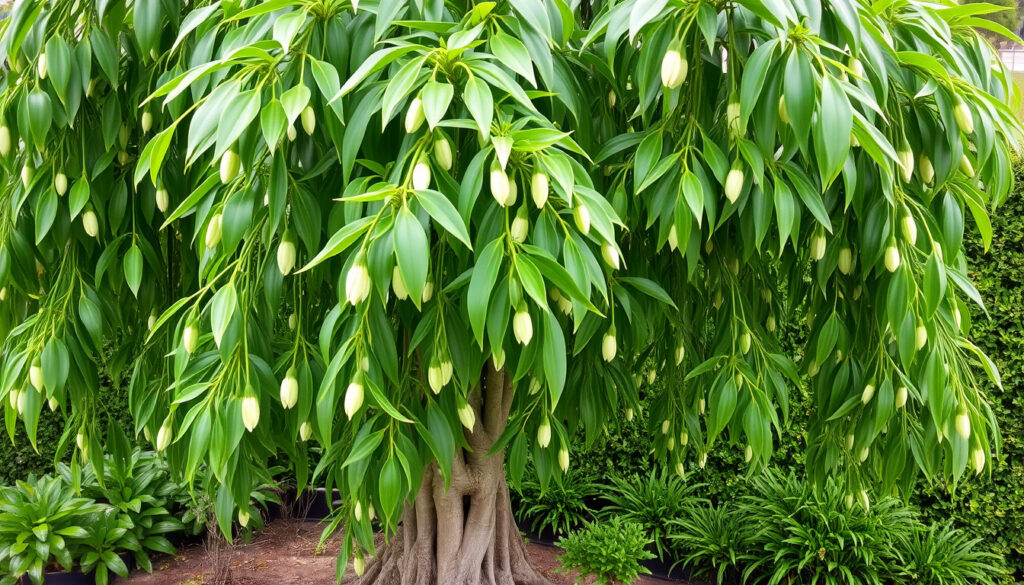
Weeping Lilly Pilly: Growth, Root System, and Hedge Guide
Few native Australian trees pull double duty quite like the Weeping Lilly Pilly. It can deliver a fast privacy screen and still work as a graceful specimen with a natural weeping form. This guide sorts through the nursery data and grower experience to give you a clear picture of its height, root system, and real-world trade-offs.
Mature height: 8–10 m (unpruned) · Growth rate: Fast – up to 1 m per year · Lifespan: 50–100 years · Hardiness: USDA zones 9–11 · Common uses: Hedge, screen, shade tree
Quick snapshot
- Waterhousea floribunda is a fast-growing evergreen Australian native (Nursery Warehouse (plant retailer))
- Mature height reaches 8–10 m under optimal conditions (Aussie Green Thumb (gardening guide))
- Root system is shallow and non-invasive (Logan River Tree Farm (nursery grower))
- Exact lifespan beyond 80 years is poorly documented in published sources
- Long-term performance in heavy clay soils lacks formal research
- Long-term psyllid resistance in different climates is not well studied
- Year 1: establishment with regular watering (as recommended by Nursery Near Me (plant care resource))
- Years 2–3: rapid vertical growth; formative pruning begins (Nursery Near Me (plant care resource))
- Years 4–5: reaches 4–6 m; first flowers and berries (Nursery Near Me (plant care resource))
- Years 10+: full maturity; minimal maintenance needed (Nursery Near Me (plant care resource))
- Monitor for psyllid damage (pimple-like bumps on leaves)
- Prune twice yearly to maintain hedge shape
- Consider dwarf cultivars for pot growing
| Attribute | Value |
|---|---|
| Scientific name | Waterhousea floribunda |
| Mature height | 8–10 m |
| Mature width | 4–6 m |
| Growth rate | Fast (up to 1 m/year) |
| Lifespan | 50–100 years |
| Hardiness | USDA zones 9–11 |
| Soil preference | Moist, well-drained, loamy |
| Sun requirement | Full sun to part shade |
How big does a weeping Lilly Pilly grow?
Mature height and width
- Unpruned trees reach 8–10 m tall with a spread of 4–6 m, according to Nursery Warehouse (plant retailer).
- The canopy develops a distinctive weeping form that makes it stand out from upright lilly pillies.
Growth rate per year
- Under ideal conditions — full sun, consistent moisture, fertile loam — growth can hit 1 m per year, per Aussie Green Thumb (gardening guide).
- Growth slows in part shade or dry soil but rarely drops below 0.5 m per year once established.
Size when kept as a hedge
- Regular pruning keeps the plant at 2–4 m, dense enough for a privacy screen. A regional nursery guide says it can be clipped to around 5 m and still function well as a hedge (Aussie Green Thumb).
- For a dense hedge, space plants about 50 cm apart, as recommended by a video guide from an Australian grower (YouTube).
The pattern: this tree grows fast enough to deliver privacy in 2–3 years, but its mature size is often underestimated. Buyers who skip the pruning schedule end up with a 10 m tree where they wanted a 3 m hedge.
The height range is a feature, not a flaw, if you plan for it. The tree’s adaptability allows it to serve as both a quick screen and a long-term shade specimen.
Are weeping Lilly Pilly roots invasive?
Root system depth and spread
- Multiple sources describe the root system as fibrous and concentrated in the top 30–60 cm of soil, with most feeding roots staying within the drip line (Lilly Pilly Guide (independent horticulture resource)).
- Ozbreed (plant breeding specialist) notes that lilly pilly roots tend to spread laterally and can extend beyond the canopy, but they are not exceptionally deep compared with other tree species.
Impact on foundations and pipes
- Nursery Warehouse describes the root system as “moderately vigorous but generally non-invasive.”
- A garden guide says Weeping Lilly Pilly is safe to plant near paving or hard surfaces (Aussie Green Thumb).
- Still, a hedge-removal contractor warns not to underestimate the root system when removing mature plants (Tree Care Specialists (removal service)).
Comparison with other lilly pilly varieties
- One guide states lilly pilly roots are generally not considered highly invasive compared with other hedging plants such as bamboo or weeping willows (Lilly Pilly Guide).
- This makes Weeping Lilly Pilly a safer choice near pools, driveways, and boundaries than many exotic alternatives.
The trade-off: roots are fibrous and non-invasive, but they follow the path of least resistance toward water. Keep plants at least 3 m from structures and underground pipes for peace of mind.
What are the disadvantages of lilly pilly?
Psyllid pest susceptibility
- Weeping Lilly Pilly is prone to psyllid damage, which shows as pimple-like bumps on leaves and can stunt new growth. This is a known issue across many lilly pilly varieties (Love The Garden (gardening resource)).
- Regular monitoring and occasional oil sprays keep psyllids in check, but the pest is persistent in warm climates.
Messy fruit drop
- The berries (lilly pillies) can stain pavers, driveways, and decking, and they attract wasps and fruit flies when they fall.
- For homeowners with pools or entertaining areas, this can mean regular clean-up during fruiting season.
Shade tolerance issues
- This species performs poorly in full shade — growth slows, foliage thins, and the weeping form becomes less pronounced. Nursery Warehouse recommends full sun to part shade for best results.
Psyllids are manageable, and fruit drop is seasonal. But planting in shade is the one mistake that cannot be fixed later — the tree will never perform as a hedge in less than four hours of direct sun.
What are the benefits of a weeping Lilly Pilly?
Aesthetic appeal and seasonal color
- New growth emerges in shades of pink and copper, adding seasonal interest that few evergreen hedges provide (Love The Garden).
- The weeping form gives it a softer, more natural silhouette than upright hedging varieties.
Privacy screening and noise reduction
- Dense foliage provides year-round visual screening, which is why it is often grown as a screen hedge (Love The Garden).
- The broad leaf canopy also absorbs sound, making it a good choice for properties near roads.
Wildlife habitat and low maintenance
- The berries attract native birds and bees, supporting local biodiversity. Once established, it requires only seasonal pruning and moderate watering.
- A care guide from Nursery Near Me (plant care resource) recommends deep-soak watering after planting to encourage thorough root establishment.
For Australian homeowners looking to replace exotic hedge species with natives, Weeping Lilly Pilly offers comparable screening speed with better wildlife value and lower water demand once mature.
The implication: the benefits strongly outweigh the downsides for most Australian gardens, as long as you have the sun exposure and are willing to manage psyllids.
How fast does a weeping Lilly Pilly grow and when to prune?
Annual growth rate
- Growth rate is 0.8–1 m per year under ideal conditions, according to Aussie Green Thumb.
- This places it among the fastest-growing Australian native hedge options.
Optimal pruning timing
- Prune in early spring before the main growth flush, and again after flowering if shaping is needed. Light tip-pruning through summer keeps the hedge dense.
- Young plants need consistent moisture during the first year, with deep-soak watering recommended by Nursery Near Me.
Height management for hedges
- With regular trimming, the tree can be kept as low as 2 m, though 3–4 m is more common for privacy screens.
- If you let it grow unchecked for 2–3 years, cutting back hard later can leave bare patches — consistent light pruning is better.
What this means: the tree grows fast enough to reward regular attention. A skipped pruning season can mean regaining control takes two more years.
Five key differences between Weeping Lilly Pilly and standard upright lilly pilly varieties, one pattern: Weeping Lilly Pilly trades some upright density for a softer, spreading form that suits larger spaces and naturalistic gardens.
| Feature | Weeping Lilly Pilly (Waterhousea floribunda) | Standard Lilly Pilly (Syzygium spp.) |
|---|---|---|
| Growth habit | Weeping, spreading canopy | Upright, columnar to rounded |
| Mature height | 8–10 m | 5–15 m depending on species |
| Growth rate | Fast (up to 1 m/year) | Moderate to fast |
| Root system | Fibrous, non-invasive | Fibrous, generally non-invasive |
| Best use | Specimen tree, large hedge | Hedge, screen, topiary |
| Psyllid resistance | Susceptible | Varies by cultivar |
Eight specs that define the Weeping Lilly Pilly, one pattern: nearly every number points to a fast, resilient tree that needs space to reach its potential.
| Specification | Detail |
|---|---|
| Botanical name | Waterhousea floribunda |
| Family | Myrtaceae |
| Native range | Eastern Australia |
| Foliage type | Evergreen |
| Leaf color | Deep green with pink/copper new growth |
| Flower season | Spring to summer |
| Fruit | Small pink/red berries |
| Water needs | Moderate; deep soak weekly in first year |
| Pruning frequency | 2–3 times per year for hedges |
| Propagation | Seed or semi-hardwood cuttings |
Upsides
- Fast growth for quick privacy screening
- Non-invasive roots safe near structures
- Attractive weeping form and seasonal color
- Supports native birds and bees
- Low maintenance once established
Downsides
- Susceptible to psyllid pests
- Berries can stain paving and attract wasps
- Performs poorly in full shade
- Needs regular pruning to stay hedge-sized
- Can reach 10 m if left unpruned
Growth timeline
Four stages define the life of a Weeping Lilly Pilly, one pattern: the first 3 years demand the most attention, after which the tree largely takes care of itself.
- Year 1: Establishment phase — regular watering and staking may be needed. Deep-soak watering encourages roots to spread, as recommended by Nursery Near Me.
- Years 2–3: Rapid vertical growth begins; start formative pruning to shape the canopy and encourage density.
- Years 4–5: Height reaches 4–6 m; first flowering and berry production. Regular pruning keeps it hedge-sized.
- Years 10+: Full maturity at 8–10 m; tree requires minimal maintenance beyond occasional shaping and pest monitoring.
What we know and what remains unclear
Confirmed facts
- Waterhousea floribunda is a fast-growing evergreen native to eastern Australia (Nursery Warehouse).
- Mature height reaches 8–10 m under optimal conditions (Aussie Green Thumb).
- Roots are non-invasive, fibrous, and shallow (Logan River Tree Farm).
- Susceptible to psyllid damage (Love The Garden).
What remains unclear
- Exact lifespan beyond 80 years is not well documented in published sources.
- Long-term performance in heavy clay soils lacks formal research.
- Whether psyllid resistance varies significantly between individual specimens is not confirmed.
Expert perspectives
“Weeping Lilly Pilly is one of the best fast-growing screening plants for Australian gardens. It responds well to pruning and has a non-invasive root system.”
— Kylie, Kilby Tree Farm, author of “Top 10 Weeping lilly pilly facts”
“Lilly pilly roots are generally not considered highly invasive compared with other hedging plants such as bamboo or weeping willows. They develop a fibrous root system concentrated in the top 30–60 cm of soil.”
— Lilly Pilly Guide (independent horticulture resource)
“The root system of lilly pilly tends to spread laterally, following the path of least resistance to access water and nutrients, but it is not exceptionally deep compared with other tree species.”
— Ozbreed (plant breeding specialist)
For Australian gardeners weighing a native hedge against exotic alternatives, the choice is clear: plant a Weeping Lilly Pilly if you have space for a 3–4 m hedge and can commit to twice-yearly pruning and psyllid monitoring. Skip it if you need a low-maintenance, shade-tolerant, or fruit-free option.
For a comprehensive overview of its size and care, the Weeping Lilly Pilly growth guide provides detailed information.
Frequently asked questions
Does Weeping Lilly Pilly lose leaves in winter?
No — it is an evergreen species that retains its foliage year-round, making it suitable for permanent privacy screening.
What type of soil is best for Weeping Lilly Pilly?
Moist, well-drained loamy soil is ideal. It tolerates sandy and clay soils as long as drainage is adequate, but heavy clay with poor drainage can slow growth.
Can Weeping Lilly Pilly be grown as a standard tree?
Yes, with formative pruning to establish a single leader and remove lower branches. It makes an attractive specimen tree with a weeping canopy.
Does Weeping Lilly Pilly have invasive roots?
Multiple sources describe the roots as non-invasive, fibrous, and shallow. They are safe near structures when planted at least 3 m away, according to Logan River Tree Farm.
How often should I water a newly planted Weeping Lilly Pilly?
Deep-soak watering once or twice a week during the first year encourages roots to establish. After that, the tree is moderately drought-tolerant, per Nursery Near Me.
Are there dwarf cultivars of Weeping Lilly Pilly?
Yes, compact forms such as ‘Sublime’ and ‘Lil Pixie’ reach 1–2 m and are suitable for pots and small gardens. Standard Weeping Lilly Pilly is not ideal for containers long-term.
What pests attack Weeping Lilly Pilly?
Psyllids are the main pest, causing pimple-like bumps on leaves. Scale and sooty mold can also occur, but psyllid damage is the most common issue reported by Love The Garden.
More related posts
 Gugu Mbatha-Raw: Ethnicity, Net Worth, Movies & Career
 Emily Blunt Biography: Career, Marriage to John Krasinski, Children
 Things to Do in Melbourne: Top Attractions & Tips
 How to Connect External Monitor to Laptop: HDMI, USB-C Guide
 Davie Fogarty: Net Worth, Companies, and Is He a Billionaire
 Roger Federer: Health, Wealth, and Djokovic Rivalry
 P Diddy Net Worth – Drops to $400 Million Amid Legal Charges
 PBKS vs MI Rain Threat: Venue Shift & Washout Rules